Cheese bread! Cachaca (sp)! Old friends! New friends! Marchador horses! It was a trip to heaven – I mean Brazil! It was the best of all worlds – I got to attend the National Show AND go out to visit farms! Perfect!
Photos below! If you click on the photo, it will show full-size and then you will need to hit the BACK button to return to the gallery and post.
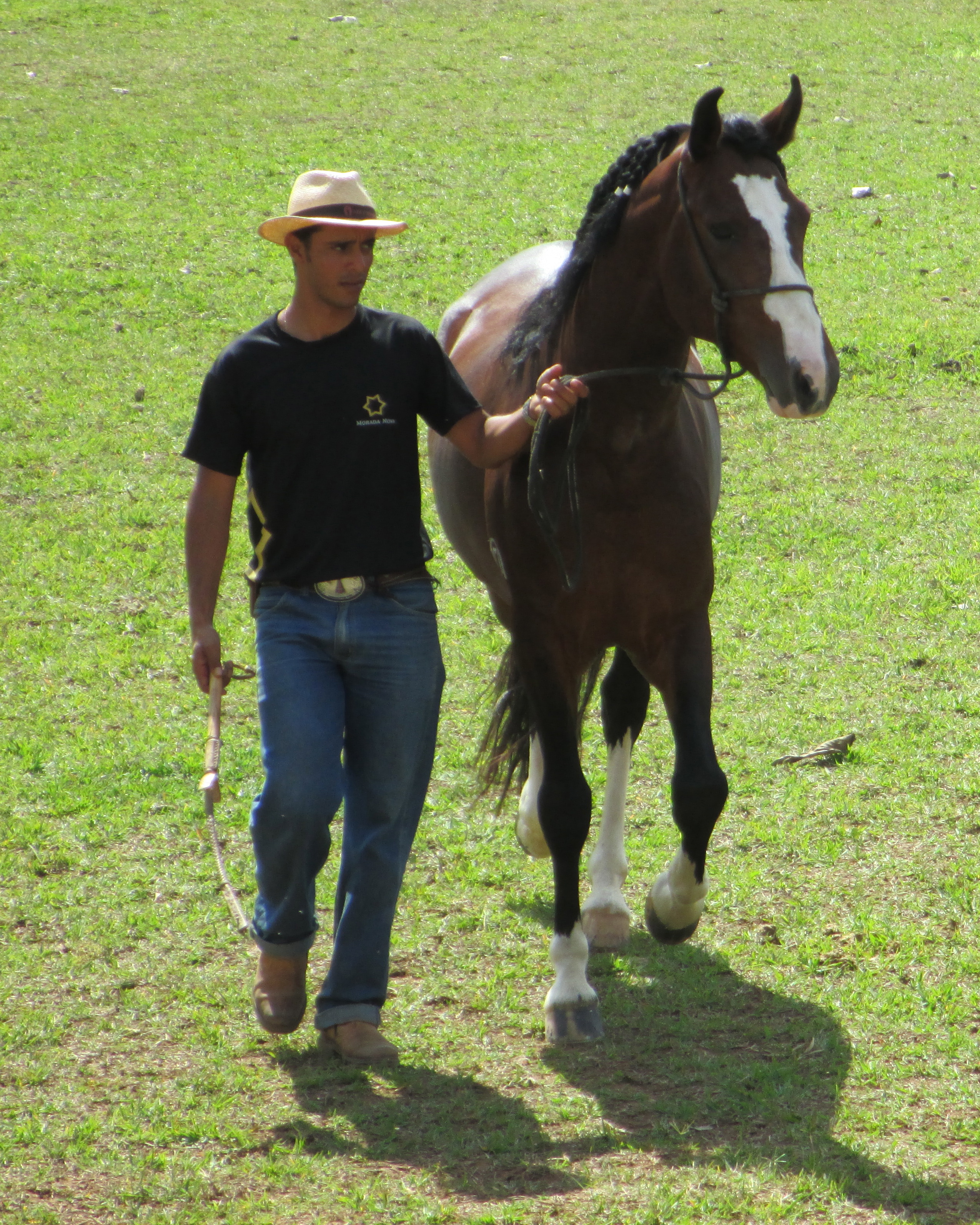
We visited two farms in Brazil, a favorite of mine, Agro Maripa and a new one for me, but by no means new, Morada Nova. Exquisite horses and fantastic Brazilian hospitality. I am always happy to be in Brazil.
At the National Show, the event provided a good mix of entertainment and business. We met old friends, and some new ones there. It feels like home to me. I went down with Rick Schatz, the Marchador breeder from Flying Oaks Ranch. We did some business there on the Brazilian Saddle Horse project. We did some shopping. We admired the horses in the show and at the farm booths. We did some ABCCMM registration work on U.S. Marchadors for several breeders.
Of great interest was the ABCCMM/APEX collaboration on the project Brazilian Saddle Horse. APEX strives to promote Brazilian products around the world and has many offices here in the U.S. They have already worked with the ABCCMM promoting the Marchador breed in Europe and also at the Carnaval in Rio 2013. Their next events may be in the US in an affiliation with the PBR, Professional Bull Riding. We will have to wait and see. Also in the works is the Marchador at other big horse and non-horse events like the 2014 FIFA World Cup and the 2016 Olympics in Brazil.
To read more about Brazil and the national show, you can keep reading!
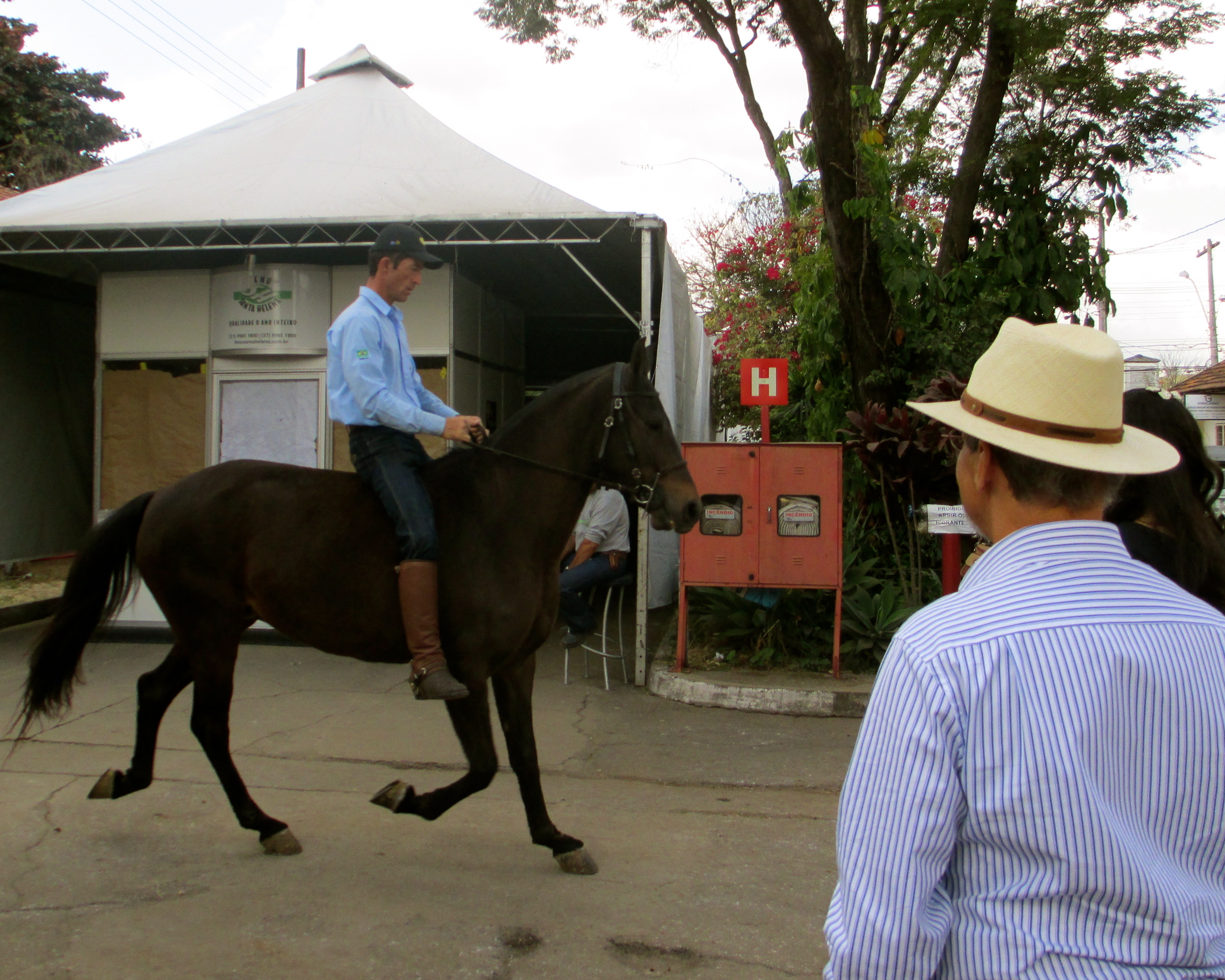
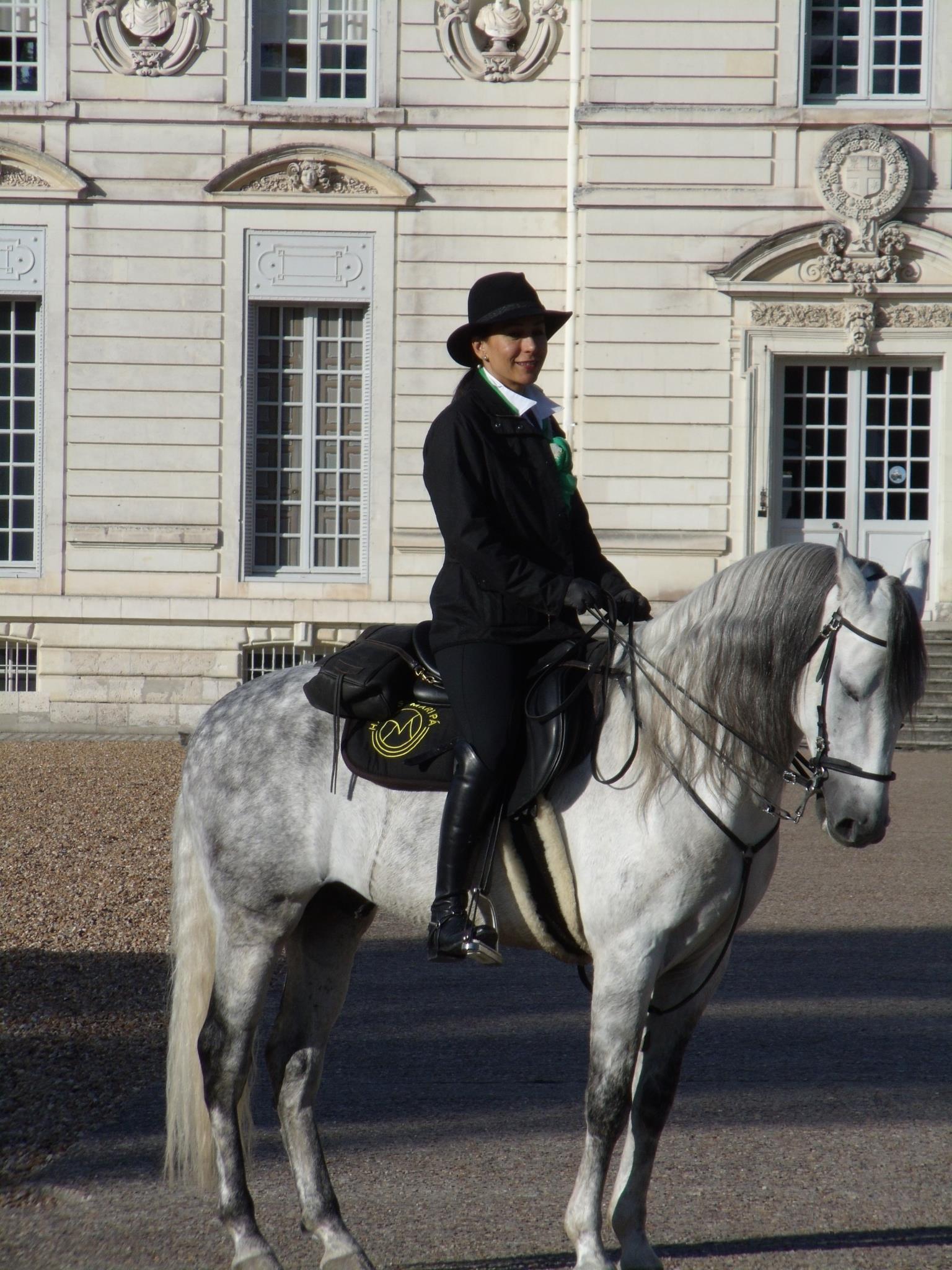
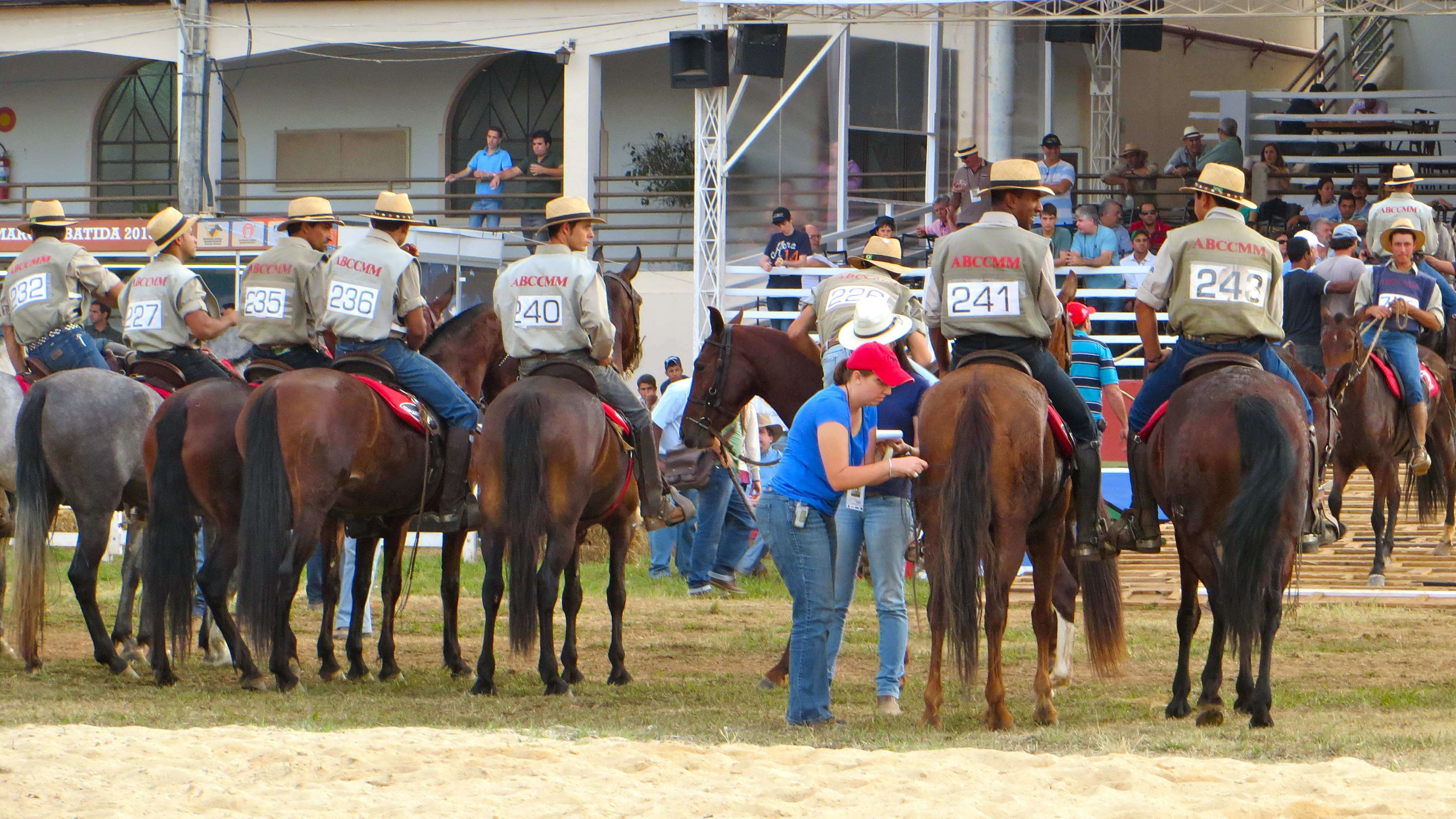
On the streets behind the arena, horses are warming up, being groomed or being presented to admiring crowds! This may be a favorite mare of mine Zinhaga de Maripa being ridden by Sergio, the trainer.
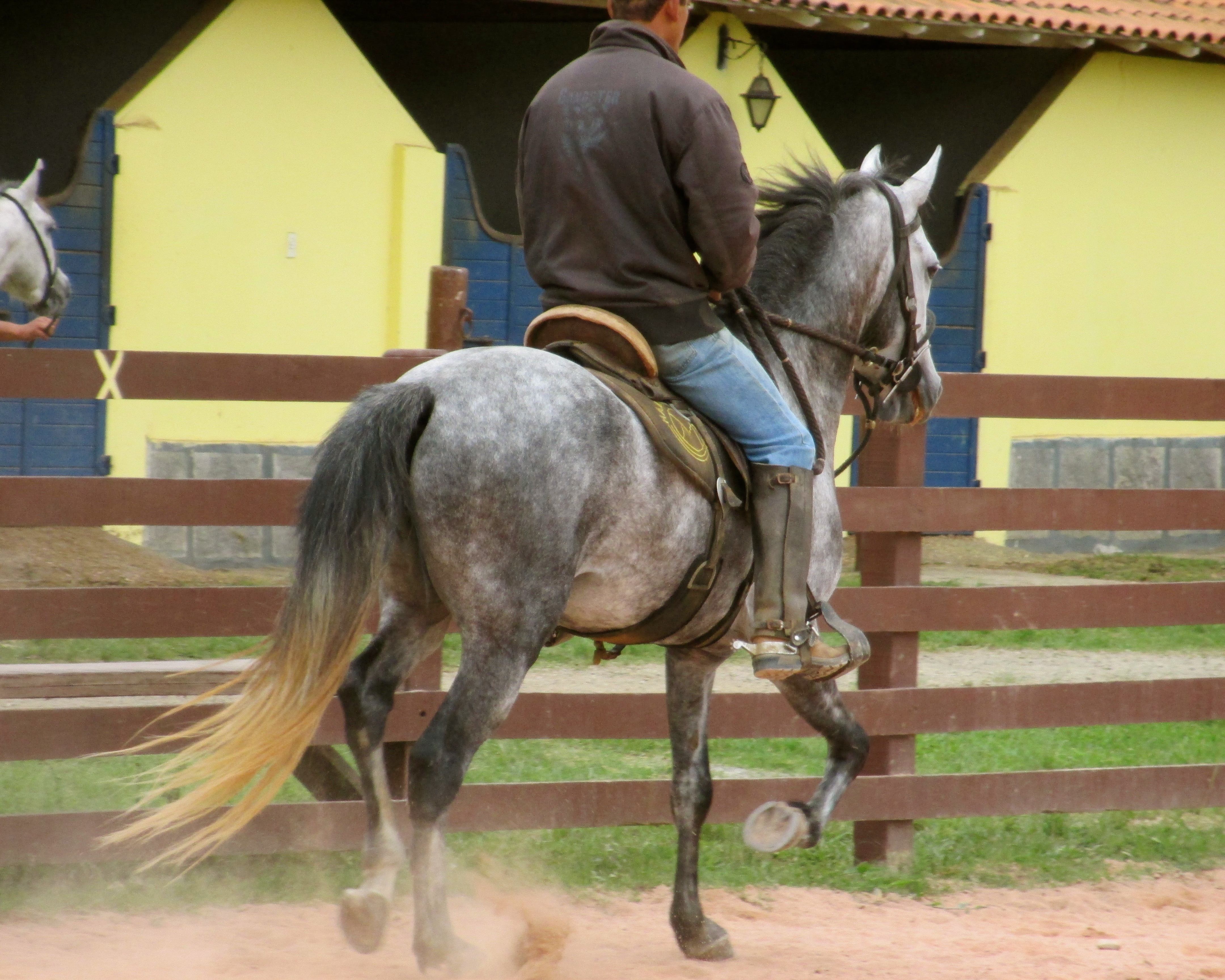
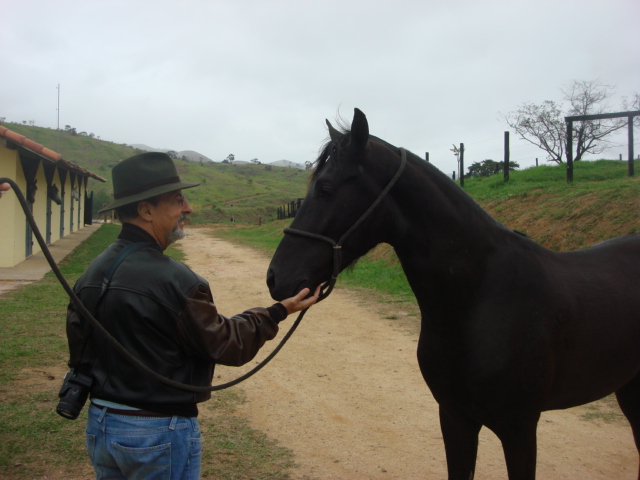
Young stallion in training at Agro Maripa training and sales facility in Minas Gerais. Had we more time, we would have also gone to the fazenda in Jaguaruina, SP.
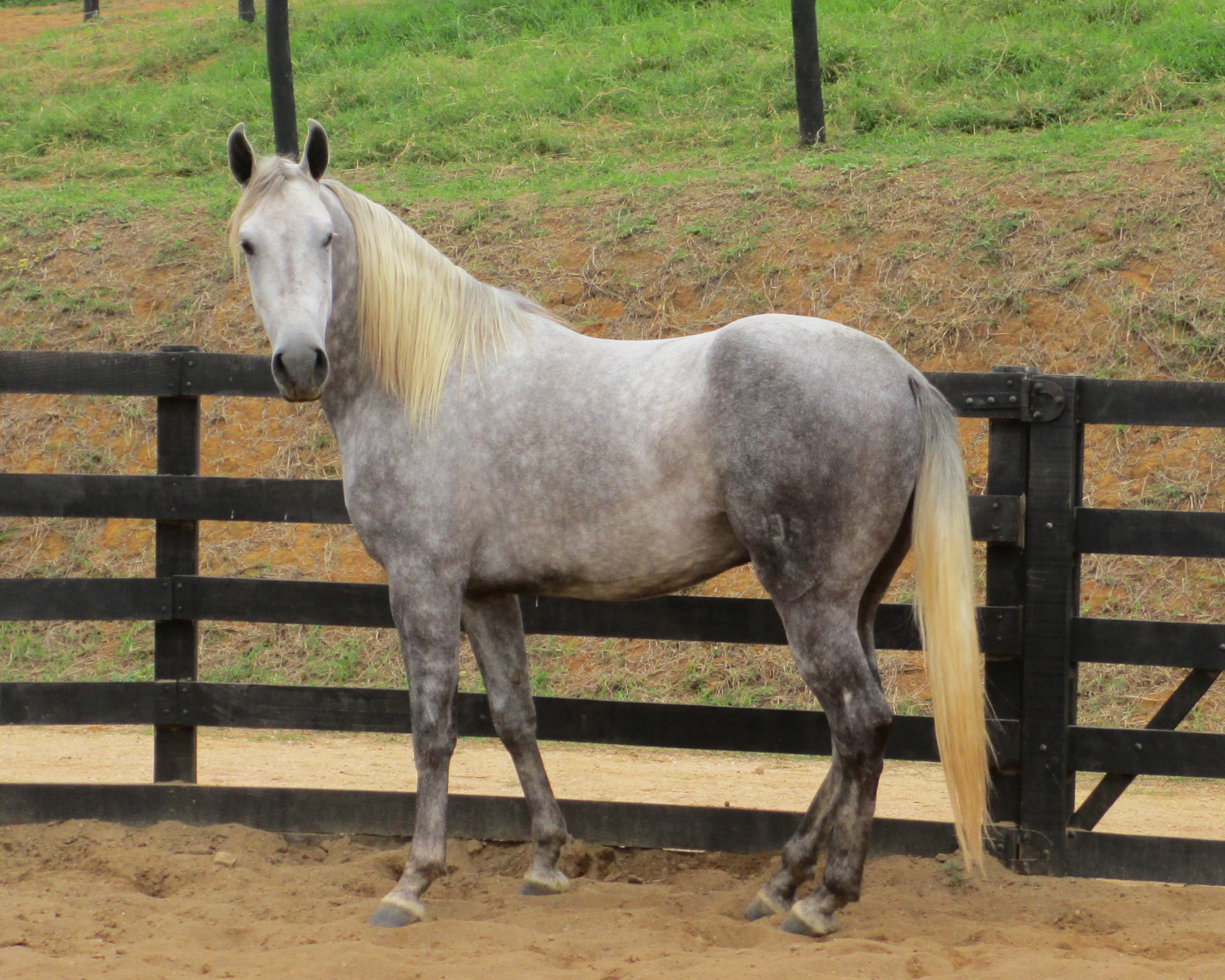
One of Ximoio de Maripa’s first sons, a young stallion about to start his saddle training. Perhaps a Hawke do Summerwind will look like this someday.
Brazilian champion stallion Teorema da Morada Nova coming out to entertain and wow the European and American crowd. And he was stunning! After winning the national champion, it’s his first or second breeding season. We can watch for his foals!
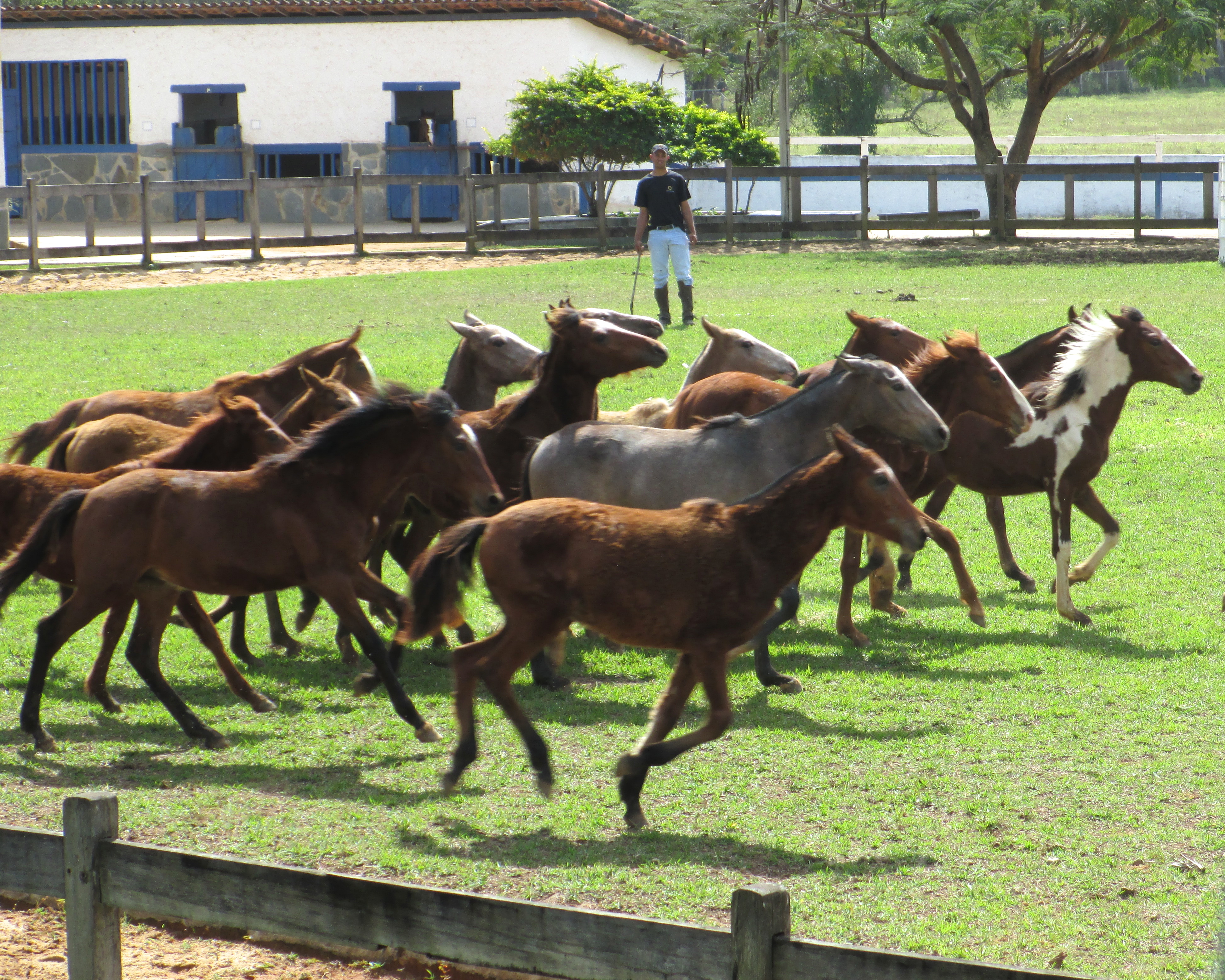
The future of Morada Nova, the foals born last winter.
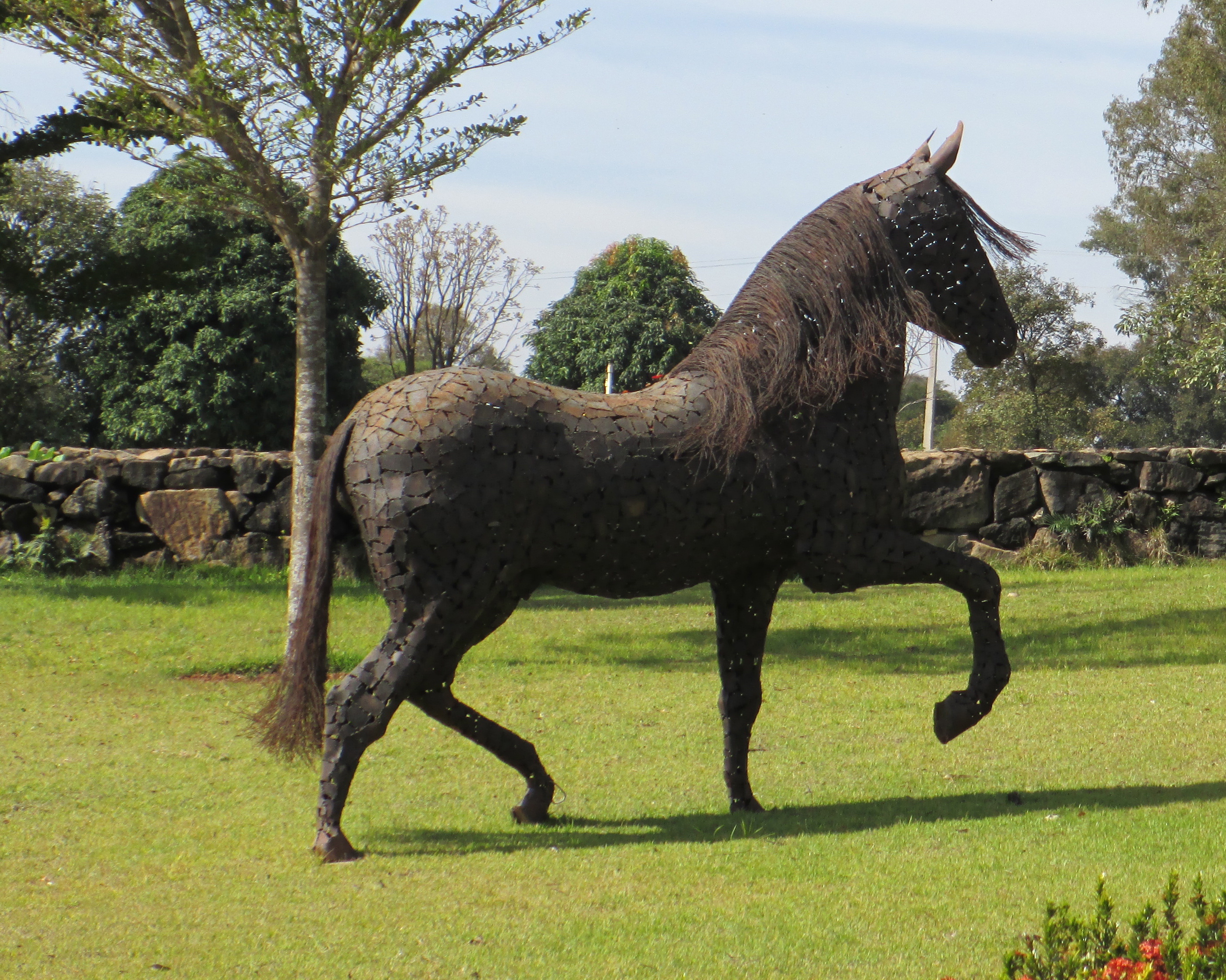
The Marchador sculpture greets you as you enter Morada Nova. We enjoyed the fazenda with its Brazilian style and art collectibles. The grounds were lovely and the horses came in from the fields to be presented to us.
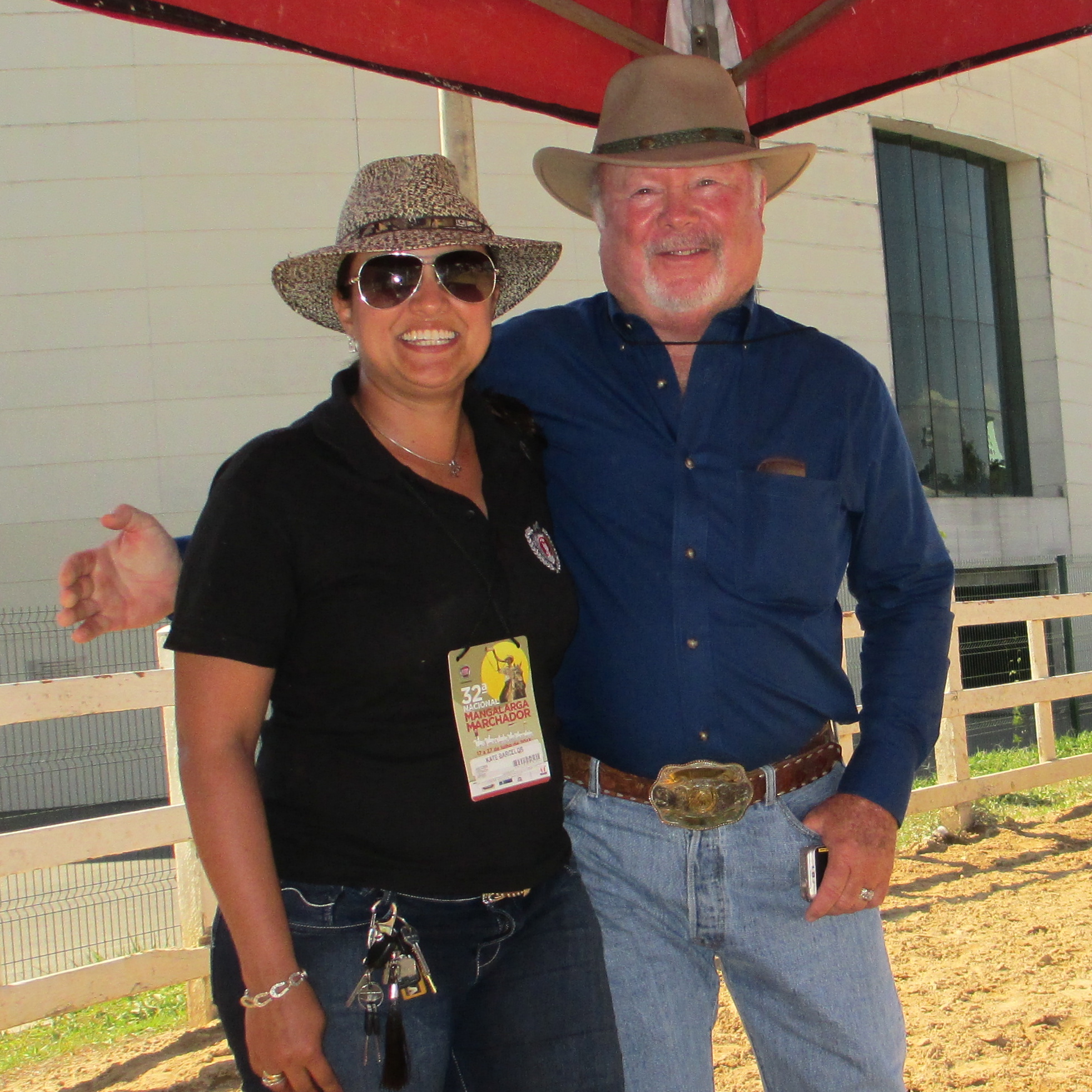
Good friends Kate Barcelos, ABCCMM and Rick Schatz, OK at the 2013 Nationals.
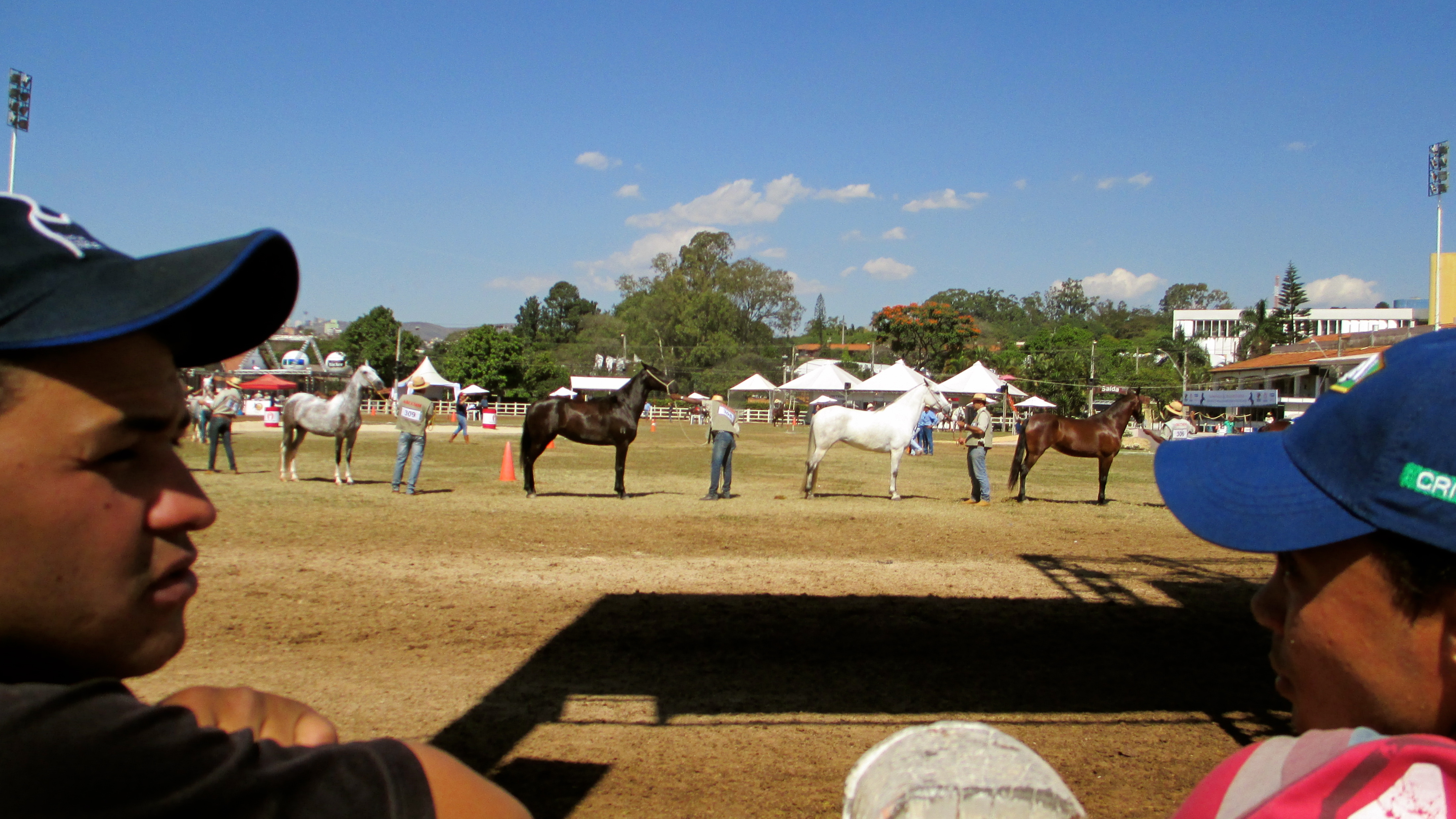
Presentation of horses for conformation class. There are 5 independent judges in each class. Like the Olympics, they throw away the high and the low score and then add the 3 to determine the winner. If it is unanimous, that is one really special horse!
Marcelo loves his horses – “too much”! This is Herdeiro de Maripa I think. Zinhaga x Buri de Maripa.
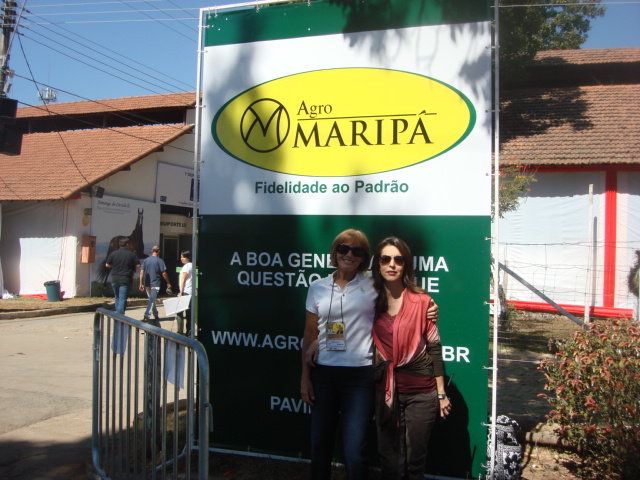
In front of the Agro Maripa sign with Claudia Godoi, ABCCMM. Claudia showed us all around when we first arrived and took good care of all of the ABCCMM guests.
Agro Maripa – the Marchador mule breeding farm. They use the gaited mules for work on the ranches. This is an old farmhouse he has restored. I have seen the project from start to finish during trips to Brazil. It looks fabulous now, inside and out!
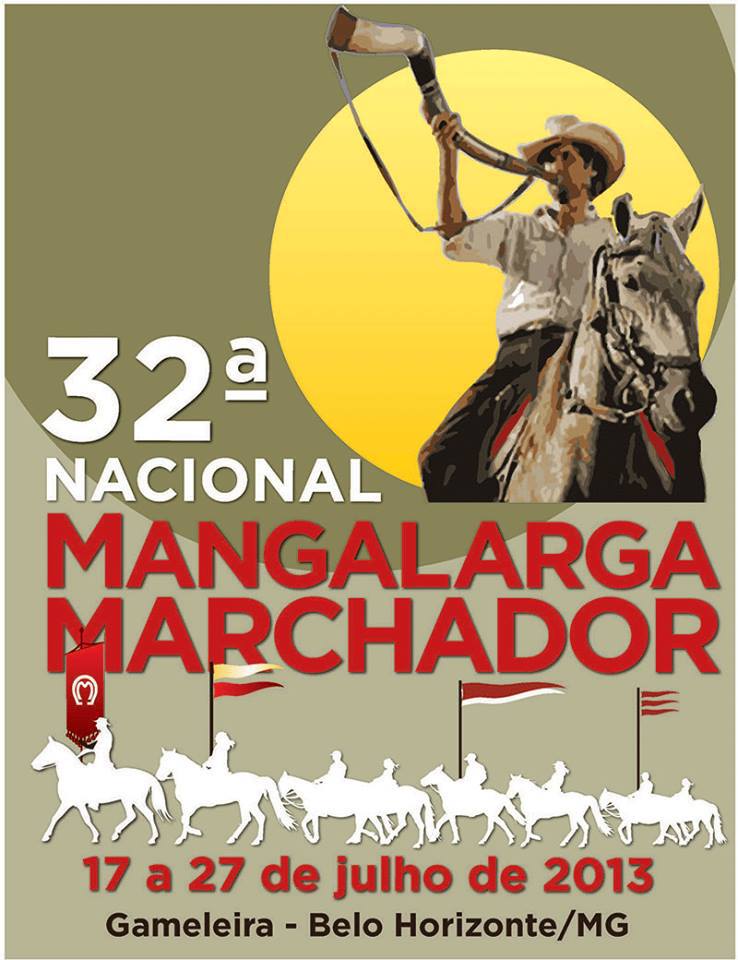
The poster for the 2013 Nationals!
The M Brand Award and a banner for the horse are given to the champions of every class. There are champions in every age bracket by sex and by gait – marcha batida and marcha picada.
CHIO 2012 – Marchador/Brazil Opening Ceremony An international competition week in Aachen Germany. The EAMM Sela de Ouro was also held there this week. During CHIO: 360,000 visitors during the week, 50,000 visitors in the jumping arena where the opening ceremony took place, 82 Million TV viewers from all over the world
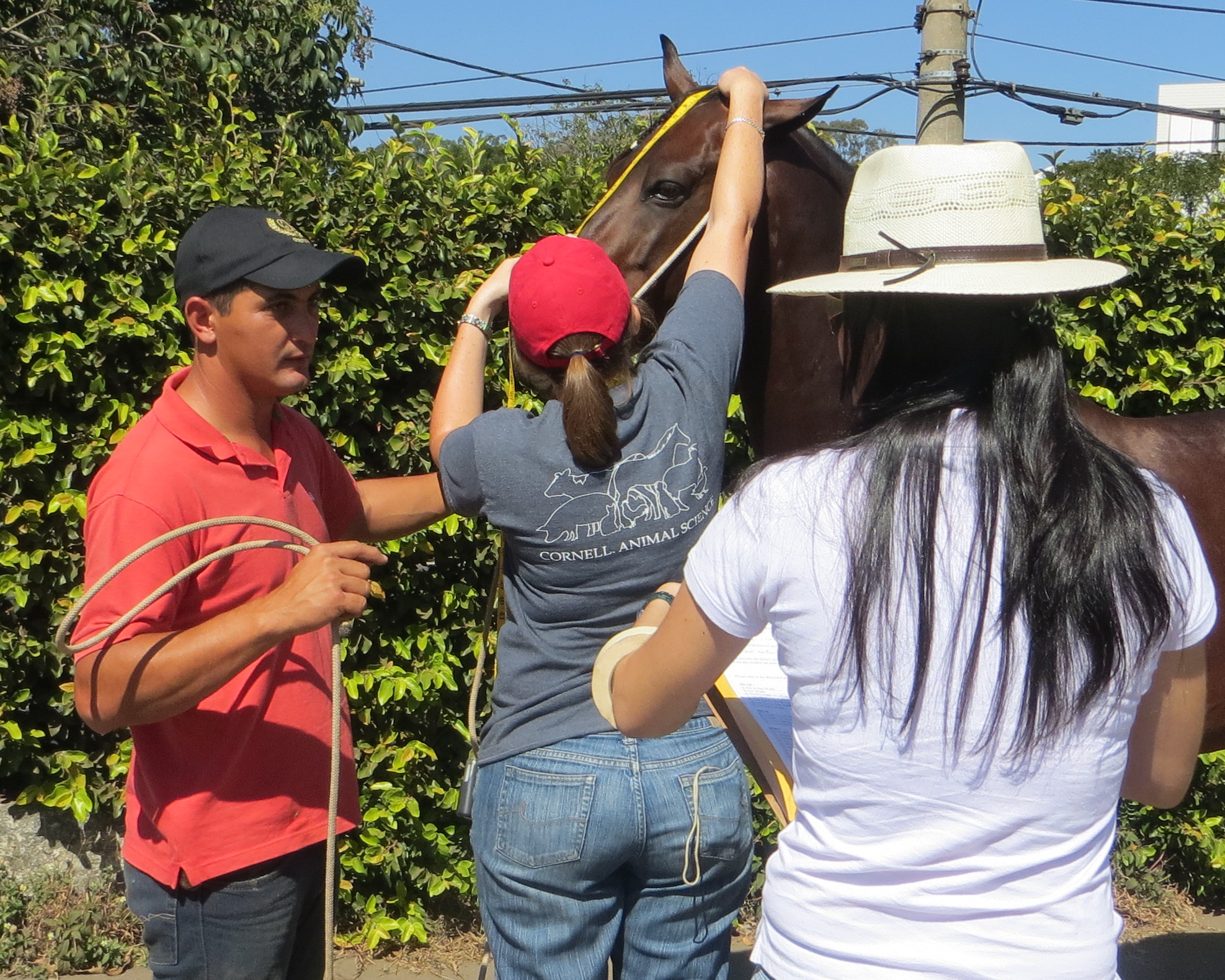
Dr. Ann, Dr Laura collecting data from Epico Capim Fino, who became the Champion of Champions at this year’s show
Dr. Ann Staiger of Cornell University is researching gaited horse breeds to find the “gait gene”. Her studies also include lots of measurements of the angles and body parts of the horse to determine the role of conformation and gait.
Ann recently traveled to Brasil during the 2012 MM National Show at the invitation of the ABCCMM and collected several hundred 100 samples there from champion Marchadors. To date, this is the best and largest cooperation from a gaited breed association that she has received.
We are all looking forward to her final paper and maybe a video presentation!!!
Ann pulling hair for the DNA during a championship class
Attached is a copy of an article that appeared in the ABCCMM magazine. It is in Portuguese and English. Enjoy.
The study includes all gaited breeds and participation is welcome. For more information about the study or about Ann, please visit the Brooks Equine Genetics @ Cornell website by following this link http://ansci.cornell.edu/brooks/study_intro.html
There are many reasons to visit Brazil! But the best reason is for their horses! Did you know that Brazil is #4 in numbers of horses? (The U.S. is #1) I go for the Mangalarga Marchador – the National Horse of Brazil.
And to have fun! Brazil’s people have a great sense of humor and warmth. And passion, especially about their soccer and their horses! They are very serious breeders with some families having many generations in horses. Some of the original bloodlines and farms are still working – after two centuries!
Ever been? Take a look. The song is about Minas Gerais (General Mines), the mountainous state in the south of Brazil where the photos were taken.
In July, I traveled alone, and in July there is only one choice for me – the National Mangalarga Marchador Exposition in Belo Horizonte, MG. Why? Because everyone is there!
The ABCCMM (Brazilian Marchador Breeders Association) holds the MM National Show every year in July for 11 days. To participate in these championships 1.500 Marchador horses and their riders from all over Brazil travel to Belo Horizonte. All of the horses have to qualify to come by winning in several regional competitions. At the National Show, you can see the top Mangalarga Marchadors of Brazil in one place, at one time. It is like a candy store for the eyes.
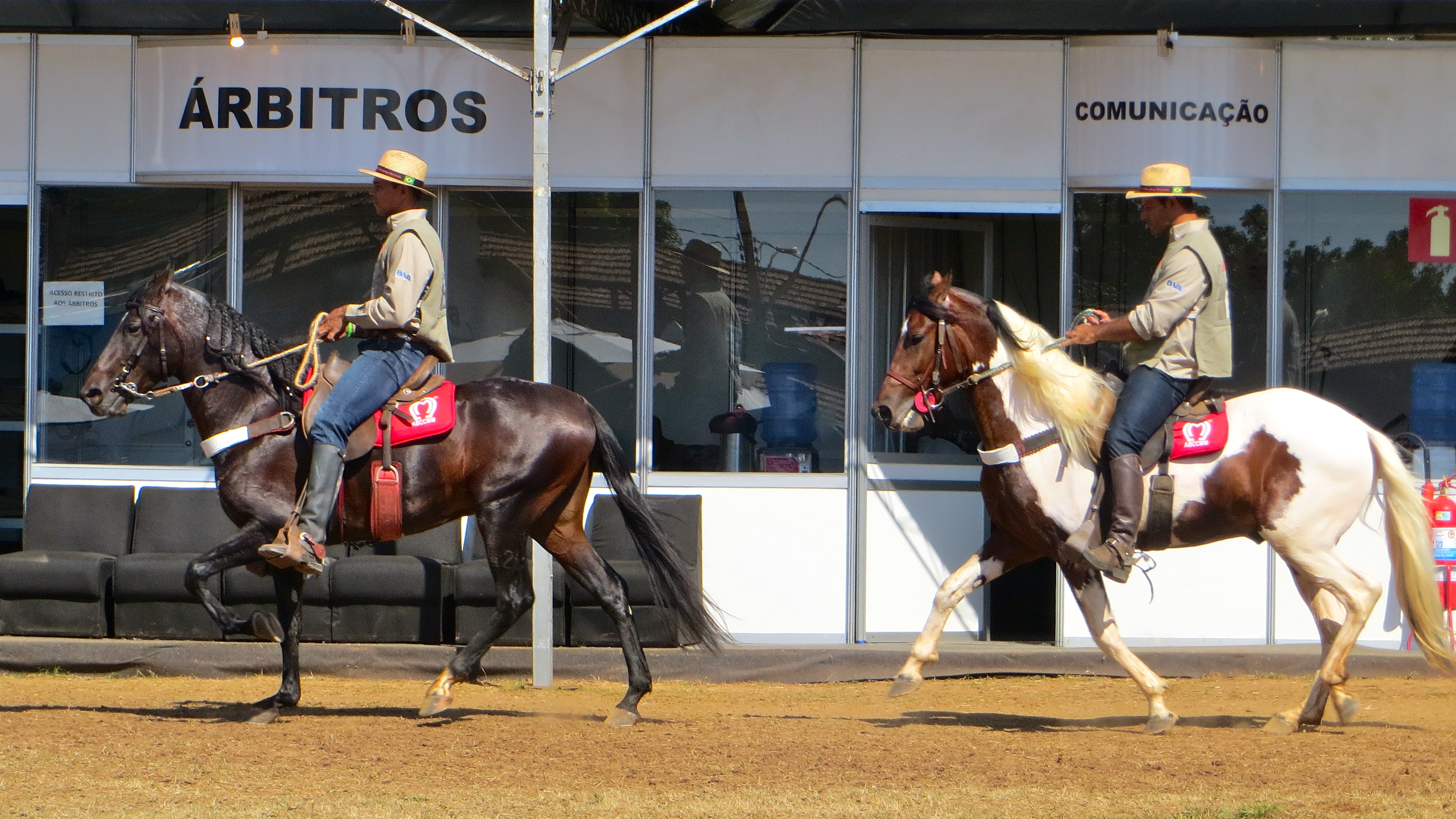
The Marcha competition in front of the Judge’s Lounge (Arbitros)
In Brazil, the land of endless spaces and great distances, special emphasis is placed on the Marchadors’ natural gait, for which they were named, called the MARCHA. There are 2 championships given in each age and sex category – Champion of the Marcha and Overall Champion. For the overall Champion, there are three parts and the scores are combined to determine the winner:
Conformation
Marcha
Functional Test
All three parts can be going on at the same time for the big ring. The Marcha tests are carried out on the outside – an oval track, very similar to a race track with the horses moving at a good speed. There are separate classes for Marcha Picada and Marcha Batida. The horses move at a constant pace for 40 to 60 minutes. The breed is known for endurance and the gait is tested to ensure it holds up over long distances.
The judging is SO different.
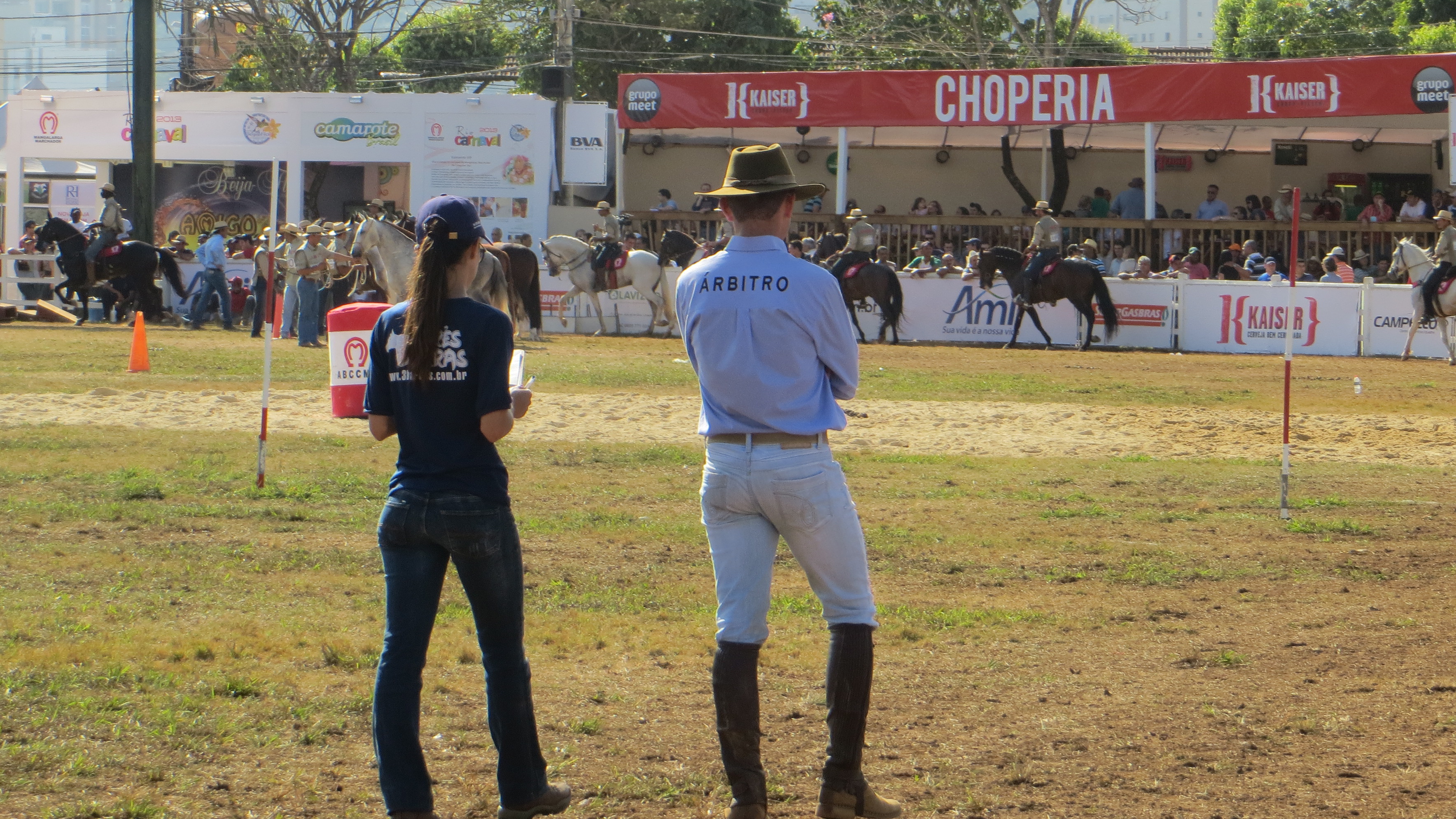
One of the 5 judges of the Marcha competition and the independent auditor.
Overall, there are about 30 judges present for the entire eleven days, and they are long days, from early morning until after midnight! There are five judges evaluating the marcha competition . Each judge is accompanied by an independent person, from an auditing company. That person is the one who marks the notes and the scores from the judge he is with. While the class in going on, the judges cannot talk to each other, only to the auditor.
Each judge rides every horse in the class! The Brazilians love to have other people, even strangers test drive their prize horses. However, in this case, the judge is checking the temperament of the Marchador as well as the gait. The gait is judged on many aspects, not just the smoothness. These are:
Gesture – the front leg lifts and forms a C
Comfort
Style
Length of stride
Regularity
The Functional Test includes obstacles like jumps and barrels and requires walk, gait, canter, backing and lateral work.
The functional test part of the class was added four years ago by the ABCCMM to test the temperament, the versatility and the overall training of the horse and rider. The fuctional test is similar to Working Equitation or a Trail Class, with obstacles like a gate, poles, barrels and jumps, performed in a pattern in specific gaits for each obstacle.
This year, I got to stand with the judge during the Functional Test to learn more about the judging and point system. What a thrill! We run this Functional Test in a simplified version here in the U.S. with our Marchador horses.
After every class champion is named, there are final classes to name the CHAMPION OF CHAMPIONS. All of the different age champions compete against each other (male and female are in different groups). The Champion of Champions this year was from a breeder I know, so I was as proud as he was when the name was called.
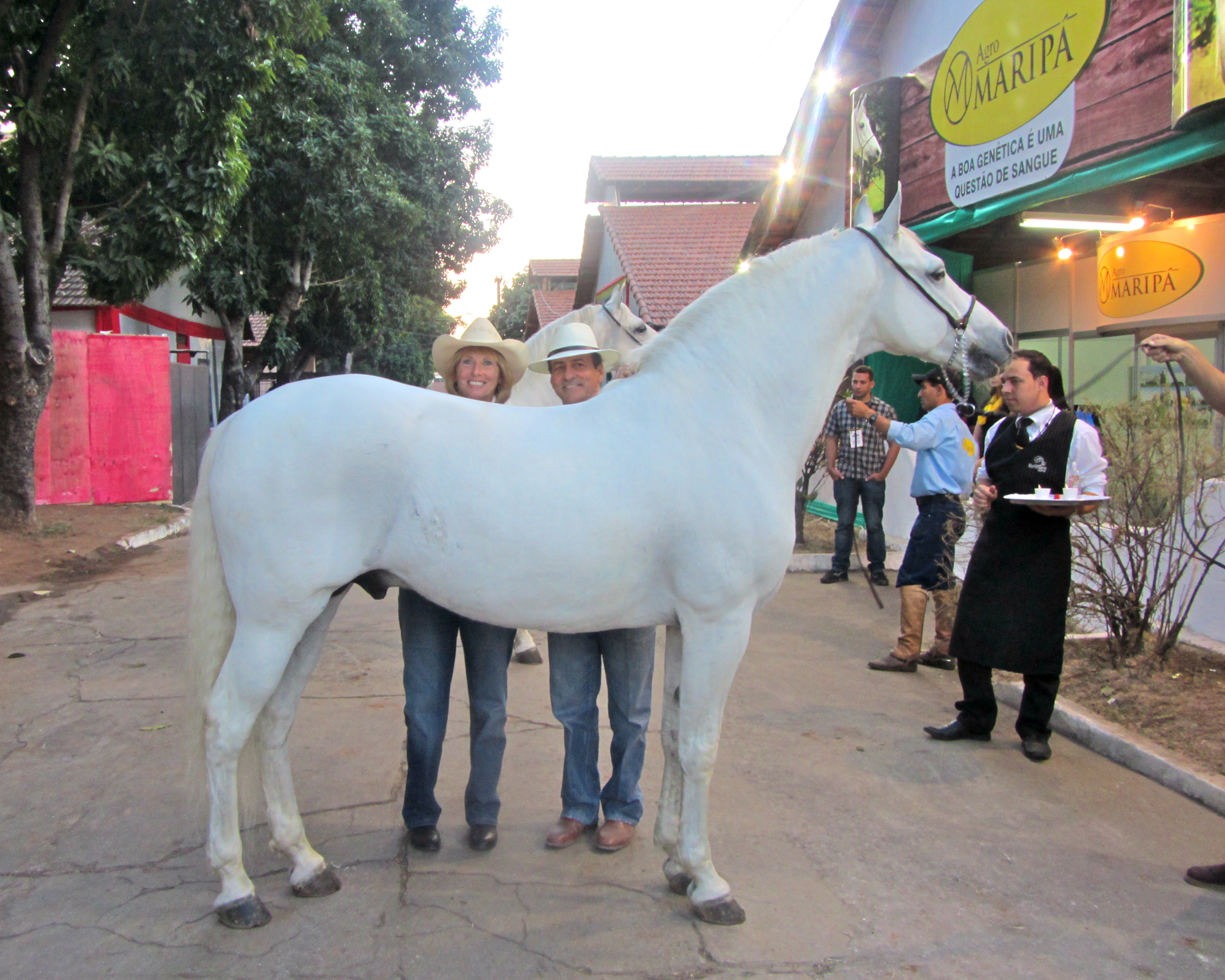
Oma de Maripa in front of the Agro Maripa booth with me and Marcelo Baptista, owner and breeder.
There is the general festive atmosphere and much to do at the National Show. At night, there are bands playing and serious horse auctions. Sometimes the Marchador is for sale (100% or 50%), but also breedings and embryos go for high prices. During the day, in other arenas, there are sporting events like pole bending, team penning and barrels. The big breeders have booths where they display their awards and their horses. The vendors are selling food, drink, saddles and more! If you see a Marchador you like, chances, are you can ask to take it for a test drive!
It was a whirlwind trip, but the ABCCMM makes it a memorable one every time. I would love to share it with you, for real.
Do you need a reason to go – here are my top 5! Mark your calendars!
November 2012 – Marchador Fest! Marchador Museum Grand Opening!
February 2013 – Carnaval in Rio! Featuring the Mangalarga Marchador!
July 2013 – National Mangalarga Marchador Exposition!
2014 – Soccer World Cup!
2016 – Summer Olympics!
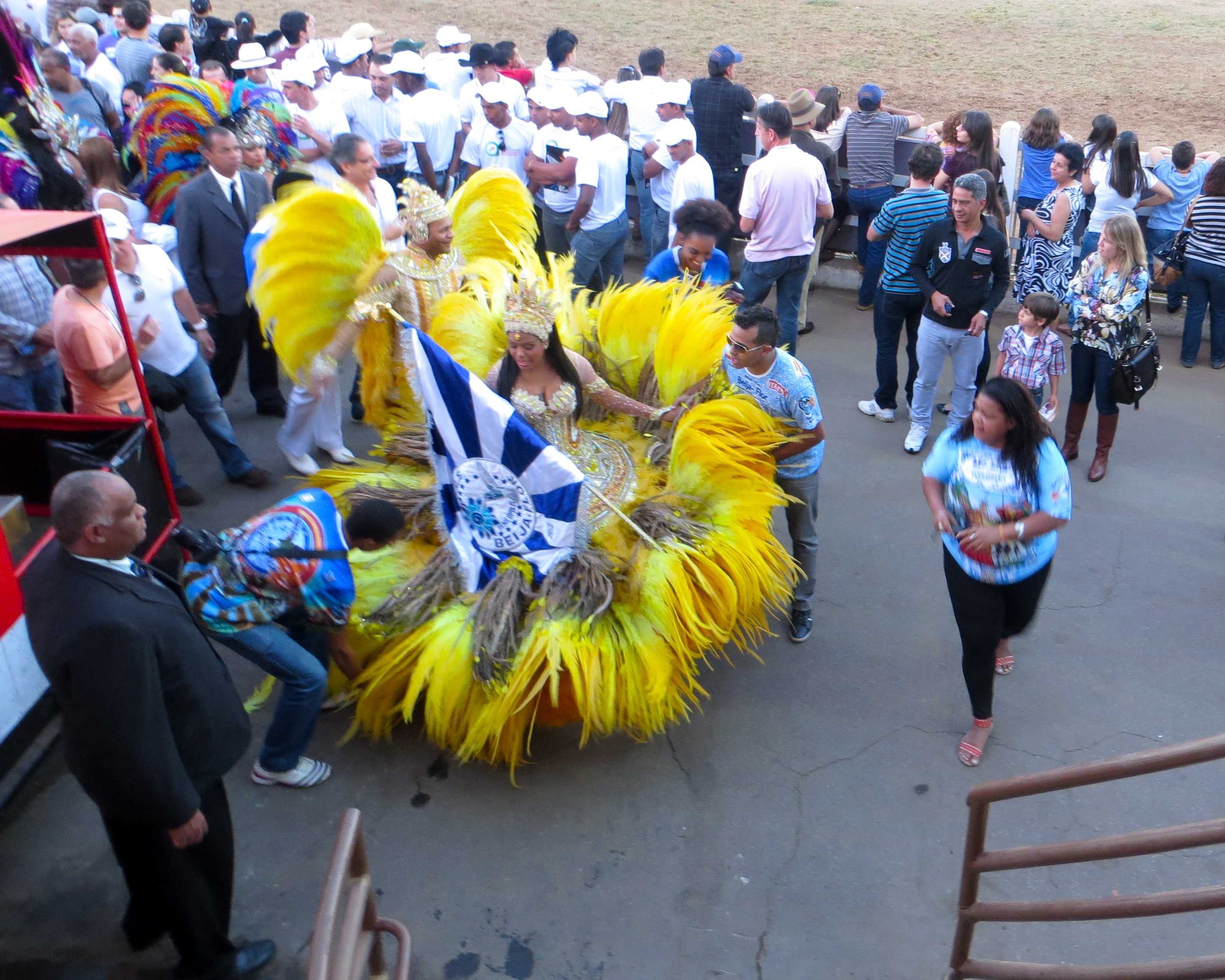
The Marchador is the feature for Carnaval in 2013!
(For anyone who was there at the clinic, I encourage you to try to hear our instructor’s voices while you read this! Please feel free to add anything you picked up in individual lessons. I have written about the gaits before, so I will not repeat those comments, but I’ll link to them in case you want MORE!)
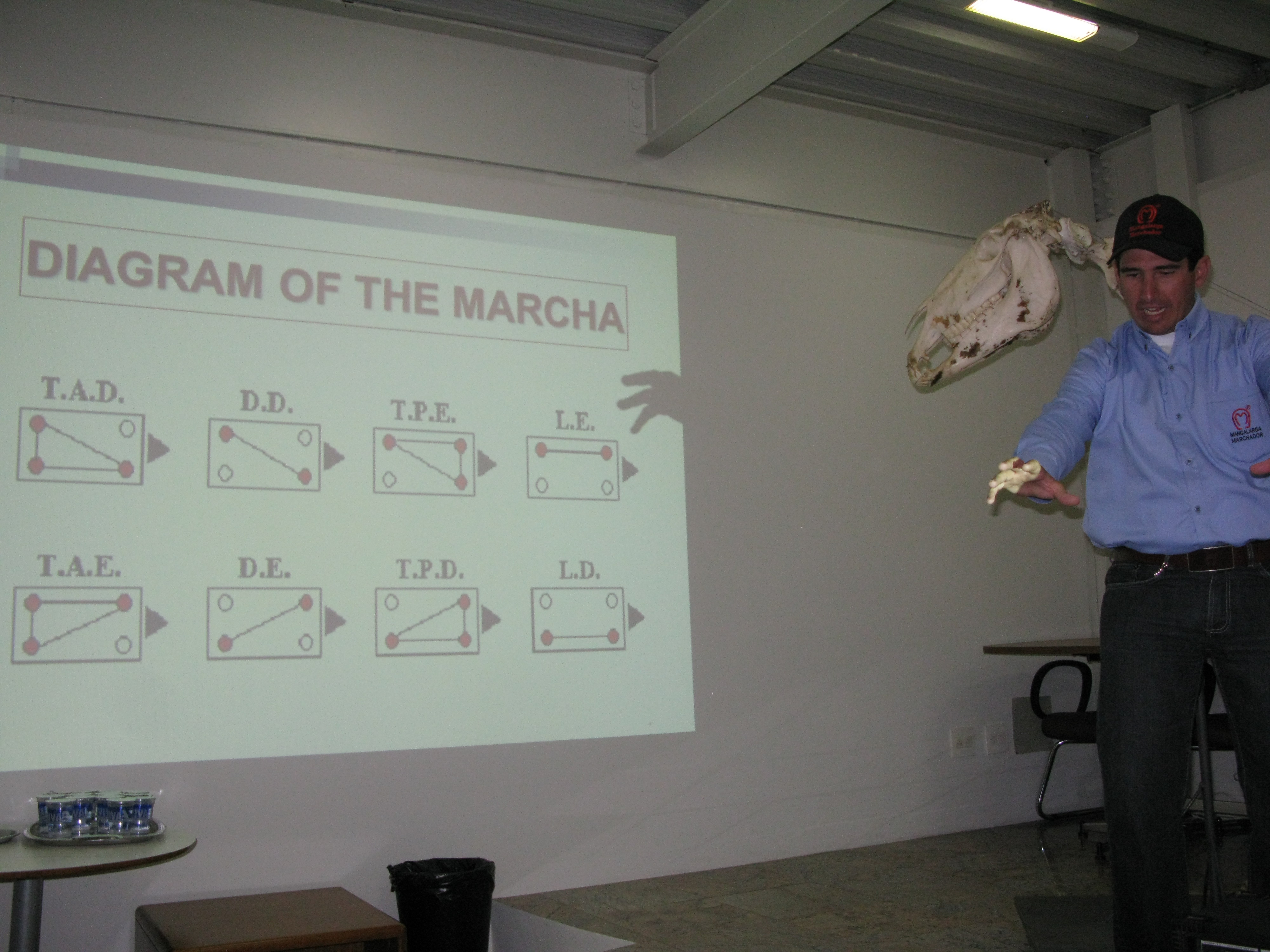
Tiago showing the diagram of the Marcha
The Mangalarga Marchador has 2 marching gaits. The Marcha is the same footfalls in both marcha picada and marcha batida.
The footfall sequence is
3
2
3
2
3
2
3
2
RH RF LH
RF LH
RF LH LF
LH LF
LH LF RH
LF RH
LF RH RF
RH RF
When the length of time spent in lateral supports is higher, then the gait is marcha picada. When the length of time is higher spent in diagonal supports is higher, then the gait is marcha batida. In both, there are moments of triple hoof support, which is what makes the gait smooth and easy to ride.
When the length of time spent in diagonal and lateral pairs are equal, it is sometimes described as marcha de centro.
To the human ear, in marcha picada, there is a much longer time (in lateral) between the footfalls making the 4 beats very distinctive and easily heard. In marcha batida, the marcha is still 4 beat, but the footfalls of the diagonal pairs land closer together making it harder to hear 4 distinct beats.
Training can help improve a Marchador’s natural gait, but genetics determine the innate quality and movement of the horse. Breeding for the center of the spectrum is the goal for a smooth and well-balanced movement.
Below is the gait spectrum:
Pace Marcha Picada /\ Marcha Batida Trot
(True lateral) CENTER (true diagonal)
Here is are some videos comparing the 2 gaits and you can HEAR the difference, although all Marchador gaits are smooth. These may not be the best examples of the MM breed, but I chose them because the horses were ridden on hard ground so you can hear as well as see.
Marcha Picada
Marcha de Centro (Marcha Batida)
Marcha Batida
“To help you feel and analyze the marcha, you need to use 5 things: 2 eyes, 2 ears and 1 seat.” says Tiago during the classroom lecture. Sometimes the marcha is not visible to a untrained human eye. The feet move too fast for us. The ears are very good to listen for the gait. And the seat, it should signal when the gait is smooth. As the rider, you try to put the horse in that place, and make that feeling and sound last for longer and longer periods of time.
“It is like a dance”. The horse must stay relaxed in the neck, but driving from behind. “So, the rider, he sets the boundary in front to make a door that is closed.” So, the horse moves into collection, but it is a give and take between the horse and rider, especially in the beginning, for the horse to stay relaxed and giving to the bit.
Okay, now we understood the diagram of the marcha.
The quality of the movement in Brasil is judged on many levels: the showiness of the gait (the C with the front legs), the diagram of the marcha (how close it comes to perfection in footfalls and timing), the length of the stride (they want it to be ground covering, extension is valued) and finally, the smoothness of the gait.
So, now how do you bring it out in your Marchador? For this, we relied on Kate’s individual riding instruction on the Marchadors brought to the clinic. Next post!