Here at SW Future Foal, we don’t use cross-ties. We use the Aussie tie rings from Clinton Anderson because we like the horse to be able to pull back if they feel they need to. However, we know many barns have cross-ties, in the wash rack, for the farrier etc.
So, here is a training tip from Lynn Boone, NC:
This is how we train our horses to the cross ties.
They have a “breakaway” halter.
For the first few times we have someone at their head with a regular leadrope. That person will drop the lead rope, walk away with a “whoa” command. Then after a few seconds, return and reward the horse for standing still. After a few times and when the horse is calm, the person grooming will put the horse in cross ties, lead rope hanging down, give the whoa command, walk around the horse (not necessarily behind, depending on how calm they are) and return and reward. The time in cross ties during the first few sessions is very short at first with lots of positive reinforcement.
Repeat as often as needed until the horse is calm and stands still.
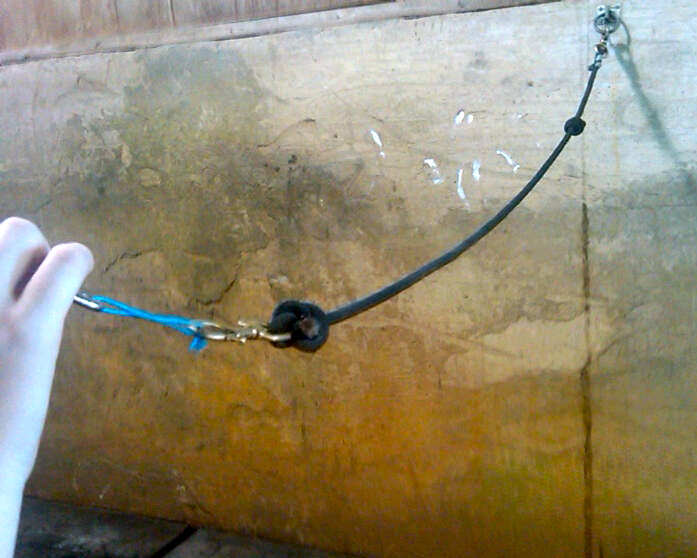
Photo of twine in between the clips on cross ties.
Perhaps this should be number one! The cross ties are attached to a small piece of breakable twine and a double end clip. I use that at the halter instead of quick release clips, because lets face it, if a horse is having a meltdown, you sometimes can’t get close enough to release it. The twine will break easily and there will only be a double end clip hanging from the halter.
As another safety note, do not leave your horse unattended for long periods of time.
It is a rather long training process but I have never had a bad result.
While the main reason for holding the clinic was our education, the format was fun and exciting. Evaluations by the judges was very informative and helpful. We did learn a LOT! Thank you Kate and Tiago!
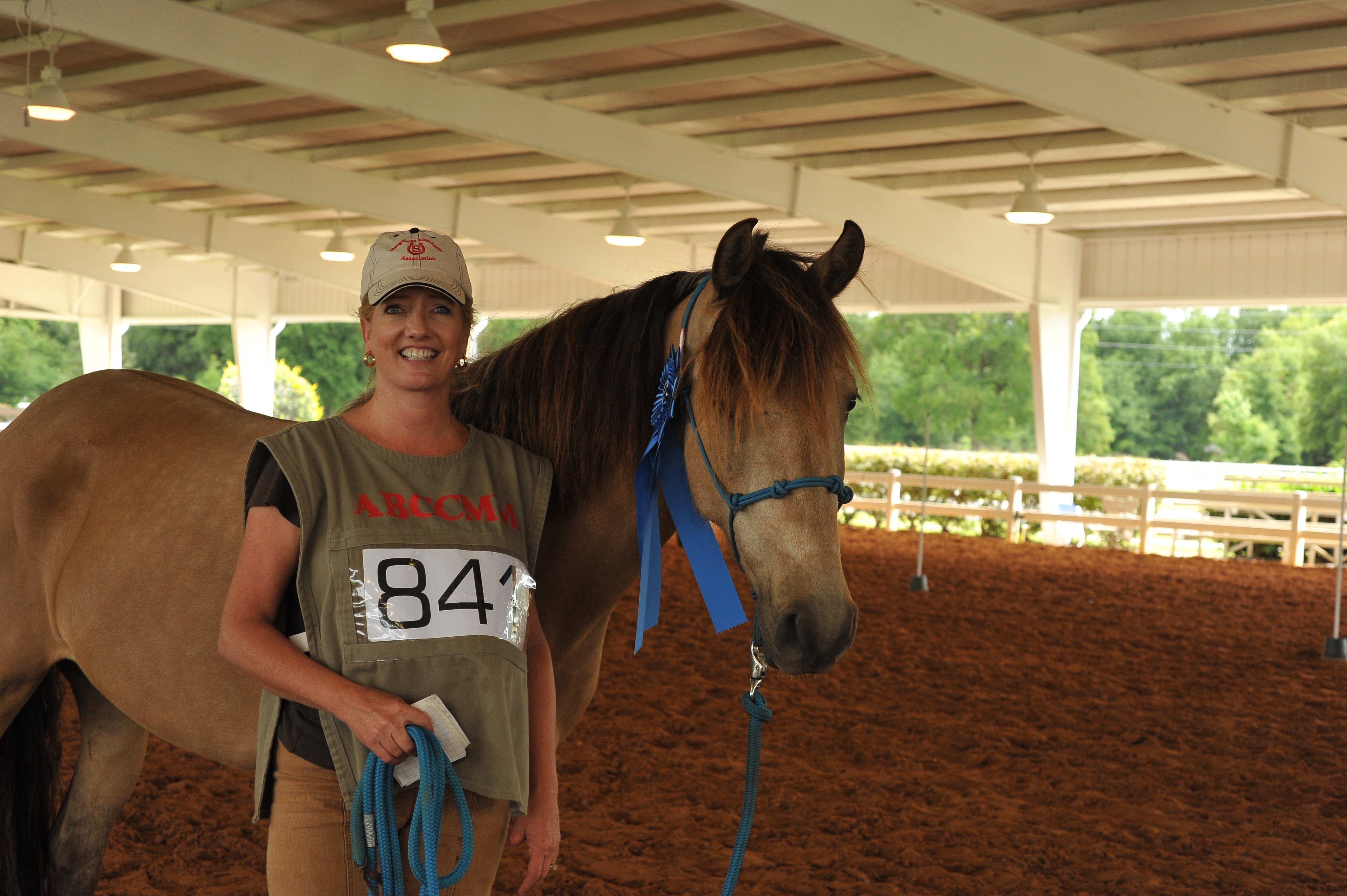
A blue ribbon for Connie and Leo!
The Trail Ride – 1st place went to Aline Greene of Saint Horse Marchadors, SC on Erva-Doce de Tesouro.
Conformation and Marcha – 1st place stallion to Bill and Sandy Kambic of Haras Lucero, TN with Ritmo A.J.
1st place mare to Bill and Sandy Kambic of Haras Lucero, TN with Aliane Fazenda Zouga. Aliane was bred in Brazil by Rick Schatz, then Fazenda Zouga, now in the U.S. breeding as Flying Oaks Ranch, OK who also was at the clinic.
1st place gelding to Connie Claire, our clinic organizer, of Ocala, FL with Leo, aka DaVinci do Summerwind, bred by us.
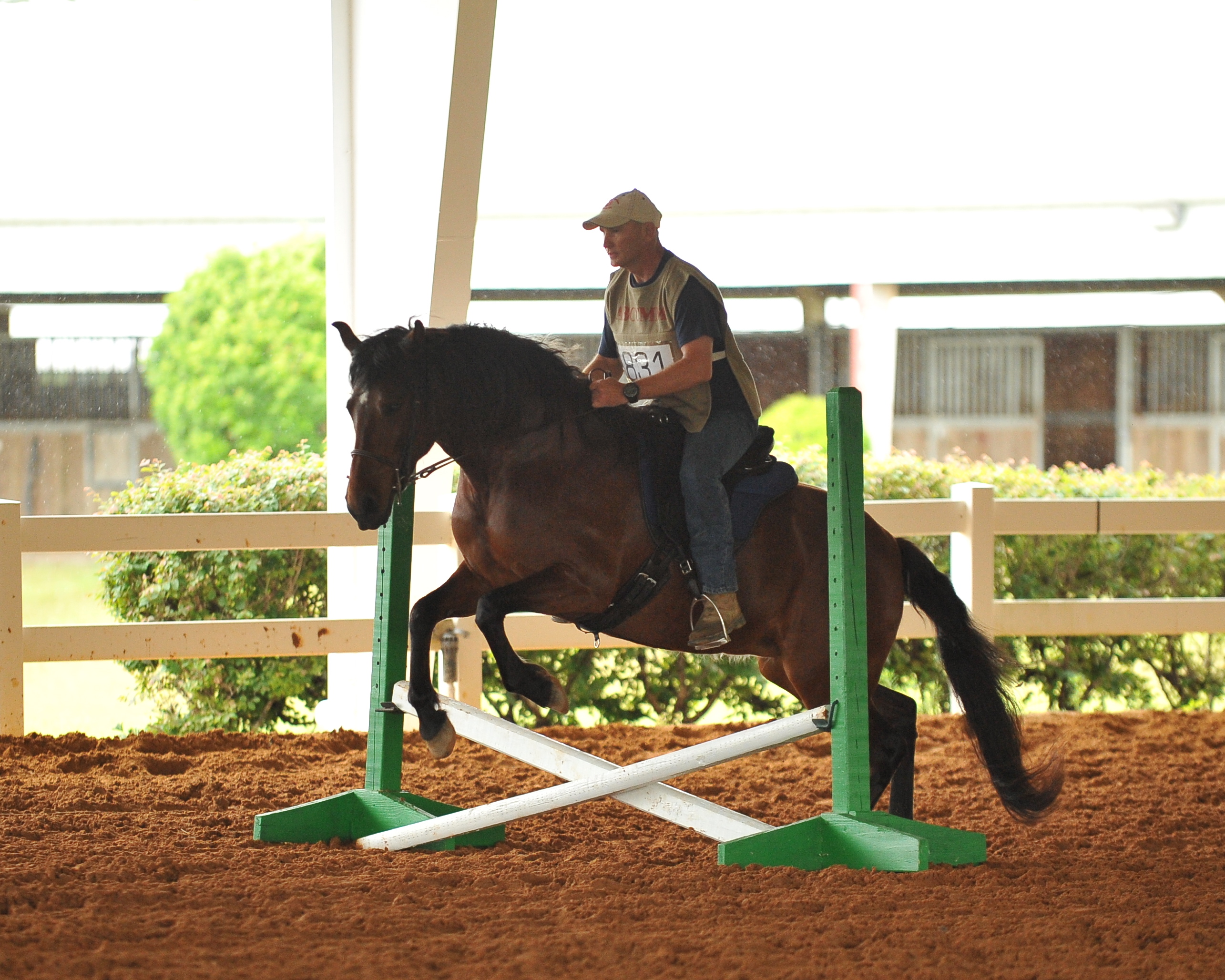
Jeff showing his winning form on Bacara! Whew - it was close!
Functional Test – 1st place won by Jeff Bosley of SW Future Foal @ Lumber Bridge on his mare, Bacara do Summerwind, bred by us.
For many participants, this was the first time they had ever done this! The riders and horses were learning fast, but there was only time for one run.
Grand Champion – Combining all of the scores over all three days, this was awarded to Jeff Bosley of SW Future Foal @ Lumber Bridge with Bacara do Summerwind.
Almost every person and horse earned a ribbon! There were quite a few Marchadors just started under saddle so we were all impressed by how well they behaved. As Tiago would say “You can see, this is a real Mangalarga Marchador!”
Congratulations to everyone! It was a great accomplishment!
The awards ceremonies were on Sunday, a great finale!
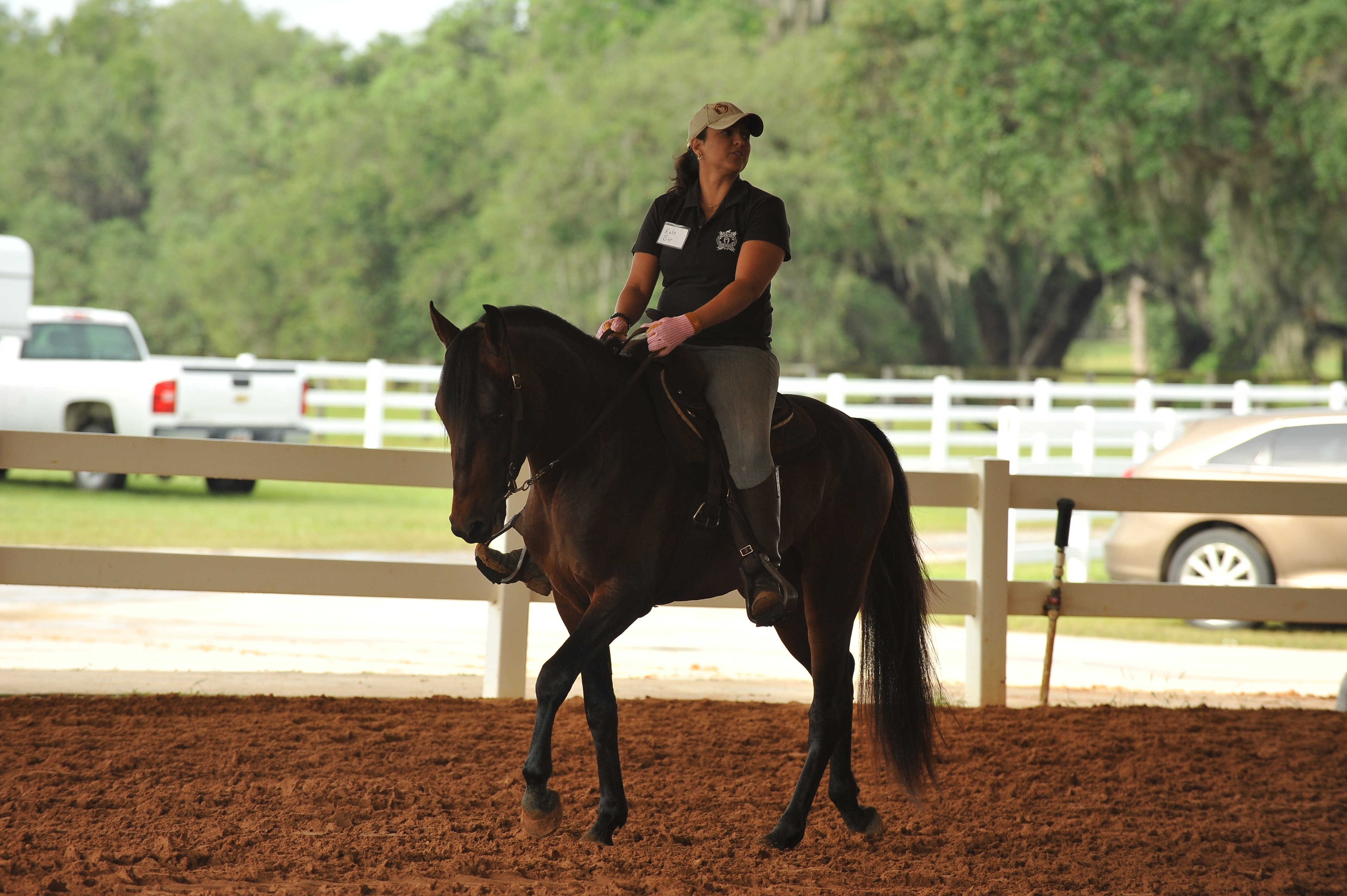
Kate riding Cheveyo do MManor, owned by Brooke Little, Marchadors InMotion
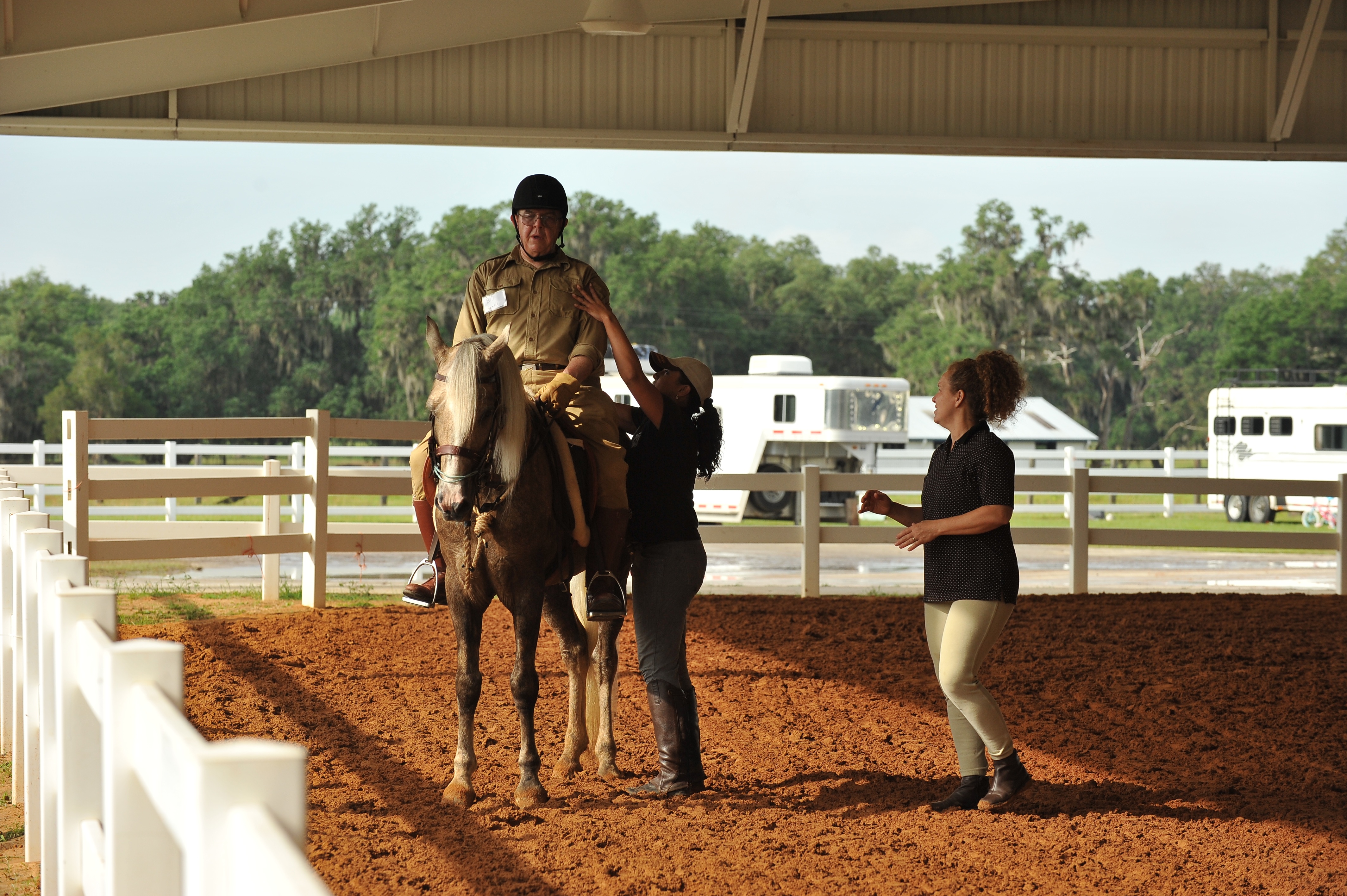
We all had a taste of riding and training under Kate’s expert guidance. Kate was able to ride each of the Marchadors herself to understand the movement and what it might need. She brought with her a toolkit and recommended different things with each horse, sometimes changing to a milder bit. Because she only had a short time with each horse and rider, she worked on getting the rider to feel the marcha when it was correct. Then they could recreate it when they got home.
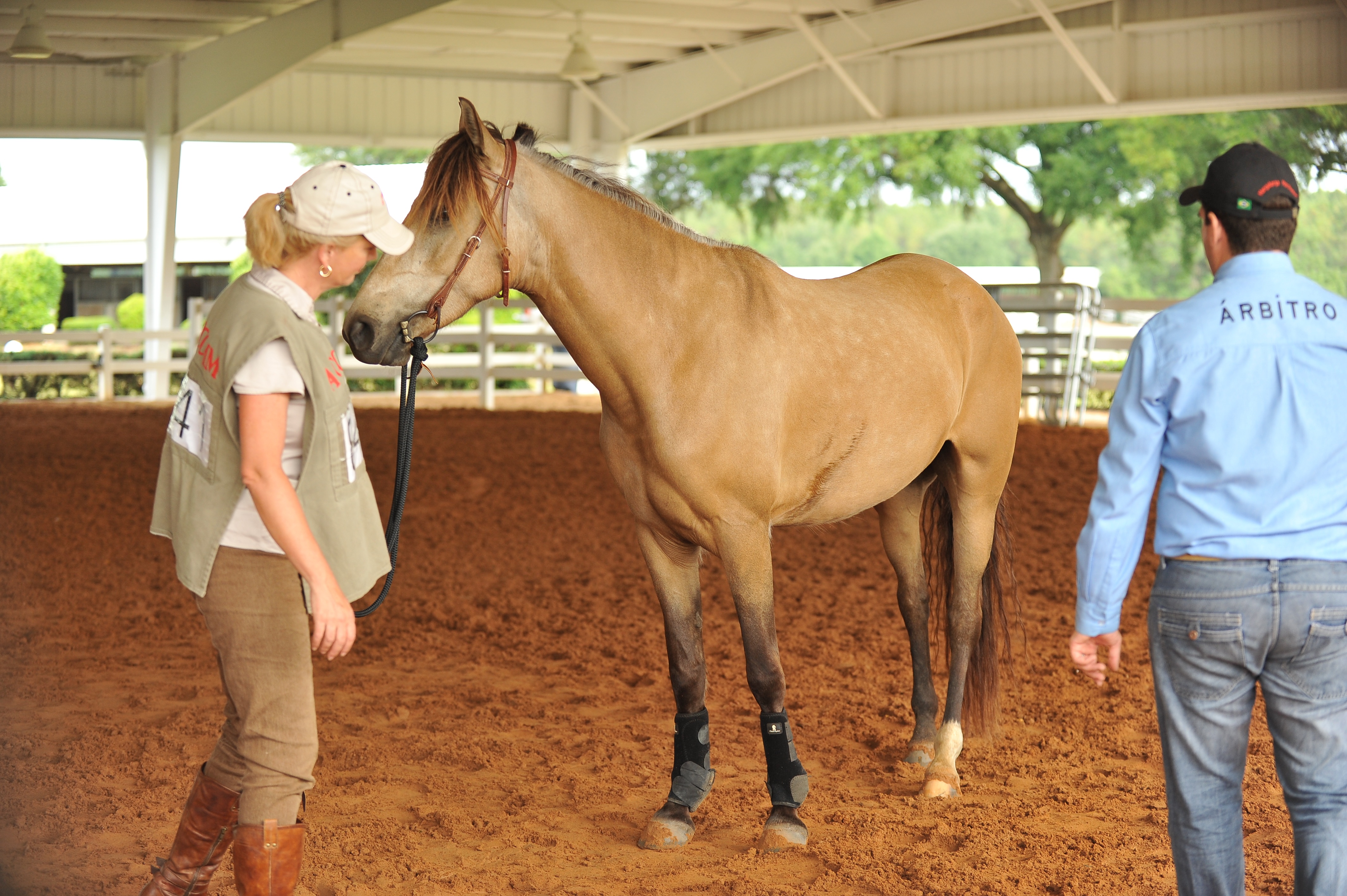
The quality of the marcha is based on many components, not just smoothness. So, there was some range in the smoothness of the gait, the extension, the lift of the front legs and the expression of the movement (as compared to the “diagram” that should be in your head at all times.) Part of the answer in the difference was in conformation, which Tiago evaluated on every horse at the clinic with the owner and sometimes the breeder paying close attention!
Conformation check for Leo (DaVinci do Summerwind) by Tiago with owner Connie Claire looking on.
The Brasilians have a complicated and precise expectation about each body part, the angles, the length and the proportion to one another. Both the conformation and the marcha are evaluated and tested on all Marchadors being registered in Brasil by the ABCCMM. Some breeders in the U.S. like us, also follow that tradition. SW Future Foal is an ABCCMM breeder.
These measurements and evaluation relate to the horse being able to move and flex the front legs and the back legs in a similar fashion. In the marcha, the front leg hits before the opposite hind leg – this is called dis-association and it’s why it is a marcha and not a trot. There is often over reach where the hind legs hit in front of where the front legs landed.
Surprisingly, all but one of the Marchadors in the clinic were marcha batida horses, even though some owners had believed perhaps that they were marcha picada because they were so smooth.
Kate in teaching mode. Bill Kambic, owner and rider on his stallion Ritmo A.J., Haras Lucero
So much valuable information given to each rider and owner! Much of it was videotaped and I will be producing videos all summer so that we don’t forget!
From this year’s clinic, here are the learnings that are ringing in my ears from Tiago and Kate.
“There are 5 senses to help you feel that the marcha is correct. Two eyes (if you are watching). Two ears (close your eyes and listen). One seat. (you can feel it).”
“Relax your horse – the neck must be flexible and supple.”
“Don’t bounce or post! Relax your hips and move with the horse.” If you move up and down the horse will follow you and not stay smooth.
“Keep your hands steady with his mouth, but relax your arms and shoulders.” I found this instruction fascinating. How can I keep my hands set but keep my shoulders relaxed? But yes, you can do it. If your shoulders are not relaxed, your hands will not be quiet.
“More speed! More leg!” Most of us here in the U.S. seem to be riding our Marchadors way too slow for them to find their way. The marcha has speeds and often the horses smooth out at higher speed, almost at a canter.
“Disassociation” The rider should be able to feel AND hear that the hind feet are not hitting the ground at the same moment as the front feet. The shoulders and hips of the horse should be swinging free and easy. That’s why it’s so important that the horse stay relaxed. And it’s also why some horses get smoother after they warm up.
“Inside rein. Move your fingers!” To keep the head flexed and neck bent and soft.
“Breathe!” To keep you soft.
Rebecca Boone on Aviadora do Campo Real, waiting her turn. Aviadora was the most improved marcha at the clinic. For her it was all about releasing tension.
Here’s what I wrote up after the 2011 Clinic and it is remains the same too.
Perfect the 4 beat extended walk. (How many times are we told to practice a good walk in other disciplines?) It is ESSENTIAL for a good marcha as it is the take-off point and retreat point always.
Practice in straight lines before teaching in circles, lateral work or ANY other discipline. Teach the horse to elongate his back, his stride, relax and stretch without speeding up.
Always start on the good side for the stretches, but do both sides. Stretching from the good side will help the bad side to stretch easier.
To move into gait: From the walk, apply more leg pressure and ask the horse to speed up without losing the smooth rhythm that was there in his walk. Collect the reins (have contact) with the horse’s mouth to ask him to collect his body in a good frame.
Do NOT let your horse continue to gait if it is gaiting badly. Go back to the walk and start again.
On the other hand, keep the marcha going for long and longer periods of time. Don’t stop! Ask for MORE SPEED from his legs while maintaining the collection. You are trying to build MUSCLE MEMORY. (This works really well! I tried it on my horses after the clinic)
A marcha picada horse that paces is often still very smooth (I was surprised by this). You can tell because your hips will go side to side instead of forward and back. Try to put your leg on for more leg speed, but if that doesn’t work, return to the walk and start over.
Place your horse on the marcha gait line L4-D4. Some horses will need training help because of poorer conformation or genetics, but some horses might need help because someone interfered with their natural gait during training. The Marchador is a willing partner. If you ask it to change its natural footfall, it will learn to do what you want.
You can use dressage to supple the horse and build muscle, but not too soon (remember straight lines). Once you can do the circles, you can move to a higher-level figure. The Marchador can do lateral work and the higher moves IN GAIT! (Another surprise for me!)
Click here if you want to read the whole SW News article: SW News411
(For anyone who was there at the clinic, I encourage you to try to hear our instructor’s voices while you read this! Please feel free to add anything you picked up in individual lessons. I have written about the gaits before, so I will not repeat those comments, but I’ll link to them in case you want MORE!)
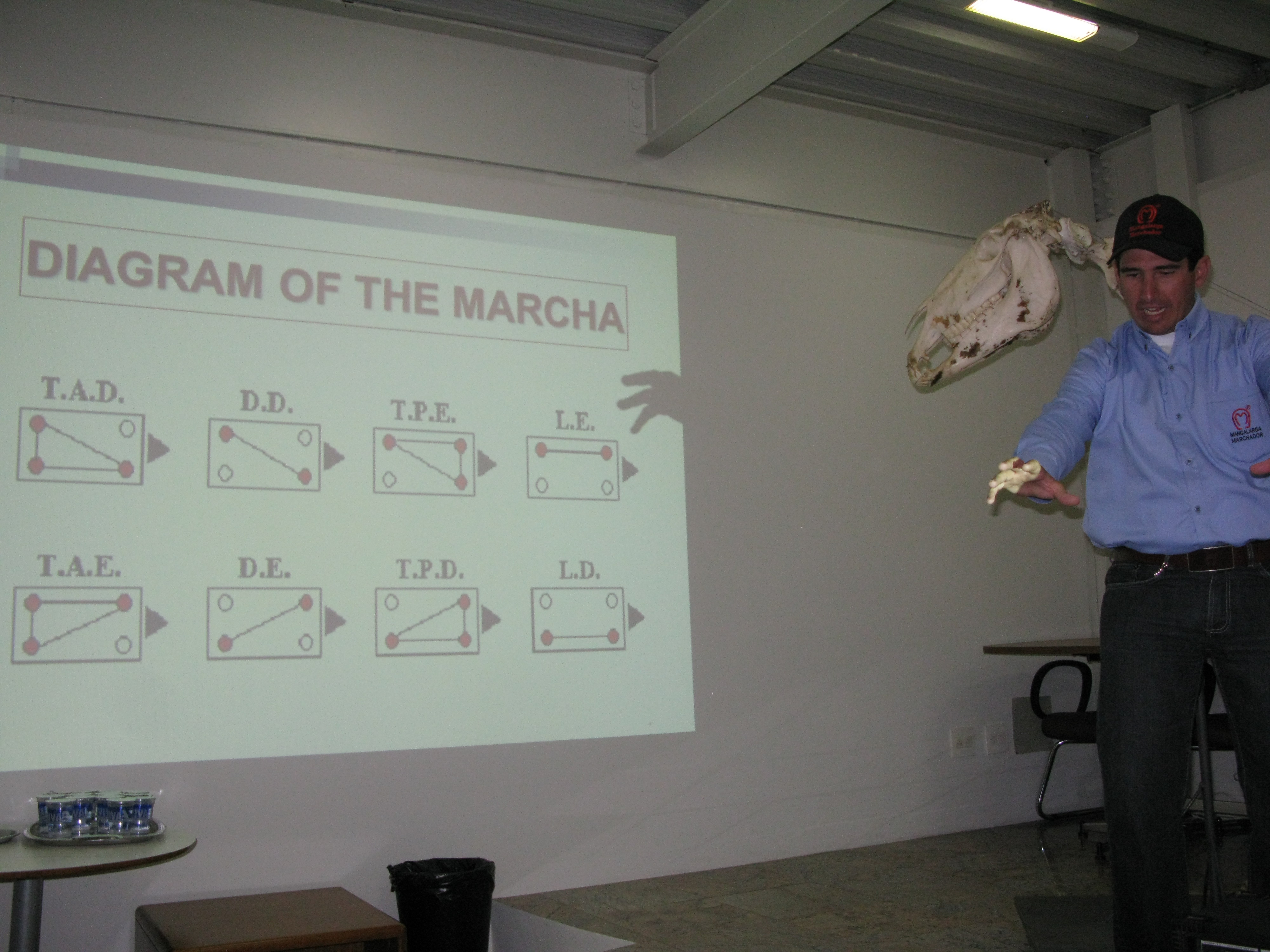
Tiago showing the diagram of the Marcha
The Mangalarga Marchador has 2 marching gaits. The Marcha is the same footfalls in both marcha picada and marcha batida.
The footfall sequence is
3
2
3
2
3
2
3
2
RH RF LH
RF LH
RF LH LF
LH LF
LH LF RH
LF RH
LF RH RF
RH RF
When the length of time spent in lateral supports is higher, then the gait is marcha picada. When the length of time is higher spent in diagonal supports is higher, then the gait is marcha batida. In both, there are moments of triple hoof support, which is what makes the gait smooth and easy to ride.
When the length of time spent in diagonal and lateral pairs are equal, it is sometimes described as marcha de centro.
To the human ear, in marcha picada, there is a much longer time (in lateral) between the footfalls making the 4 beats very distinctive and easily heard. In marcha batida, the marcha is still 4 beat, but the footfalls of the diagonal pairs land closer together making it harder to hear 4 distinct beats.
Training can help improve a Marchador’s natural gait, but genetics determine the innate quality and movement of the horse. Breeding for the center of the spectrum is the goal for a smooth and well-balanced movement.
Below is the gait spectrum:
Pace Marcha Picada /\ Marcha Batida Trot
(True lateral) CENTER (true diagonal)
Here is are some videos comparing the 2 gaits and you can HEAR the difference, although all Marchador gaits are smooth. These may not be the best examples of the MM breed, but I chose them because the horses were ridden on hard ground so you can hear as well as see.
Marcha Picada
Marcha de Centro (Marcha Batida)
Marcha Batida
“To help you feel and analyze the marcha, you need to use 5 things: 2 eyes, 2 ears and 1 seat.” says Tiago during the classroom lecture. Sometimes the marcha is not visible to a untrained human eye. The feet move too fast for us. The ears are very good to listen for the gait. And the seat, it should signal when the gait is smooth. As the rider, you try to put the horse in that place, and make that feeling and sound last for longer and longer periods of time.
“It is like a dance”. The horse must stay relaxed in the neck, but driving from behind. “So, the rider, he sets the boundary in front to make a door that is closed.” So, the horse moves into collection, but it is a give and take between the horse and rider, especially in the beginning, for the horse to stay relaxed and giving to the bit.
Okay, now we understood the diagram of the marcha.
The quality of the movement in Brasil is judged on many levels: the showiness of the gait (the C with the front legs), the diagram of the marcha (how close it comes to perfection in footfalls and timing), the length of the stride (they want it to be ground covering, extension is valued) and finally, the smoothness of the gait.
So, now how do you bring it out in your Marchador? For this, we relied on Kate’s individual riding instruction on the Marchadors brought to the clinic. Next post!
It’s an annual migration to Colorado in late April or early May! And it’s a good thing too, as the temperatures in Scottsdale are almost in triple digits. We love being able to enjoy riding and the outdoors every day! And the horses….. well, the horses are just different here. They look better, more alive, taller, shinier! There is no way to fully describe it.
By now, it’s our 6th year here, they know where they are. They know the routine. Koyote comes off the trailer and gaits right down the barn aisle to his stall. He’s so smart! We need to get them adjusted to the grass, but that is about it.
I guess by now, we know the routine too. We were unpacked that night and we started riding the very next day! Even by our standards, that was fast. The only change for us is that we are getting older – but what’s wrong with more wine on the porch watching the elk or deer graze across the street? Perhaps this is the year without the laundry list of projects. Bring on the trail rides in the mountains, new journeys to Taos, maybe visiting the LONE RANGER movie set and just enjoying each wonderfully clear, crisp Colorado morning.
We’d love to share Colorado with you! Come and meet the Marchador and share our passion.
As always, thanks to Ned Leigh for taking such good care of our horses during the ride here. www.nedleighequinefocus.com
Take a look into our life! If you click on a photo, you can get the large image.
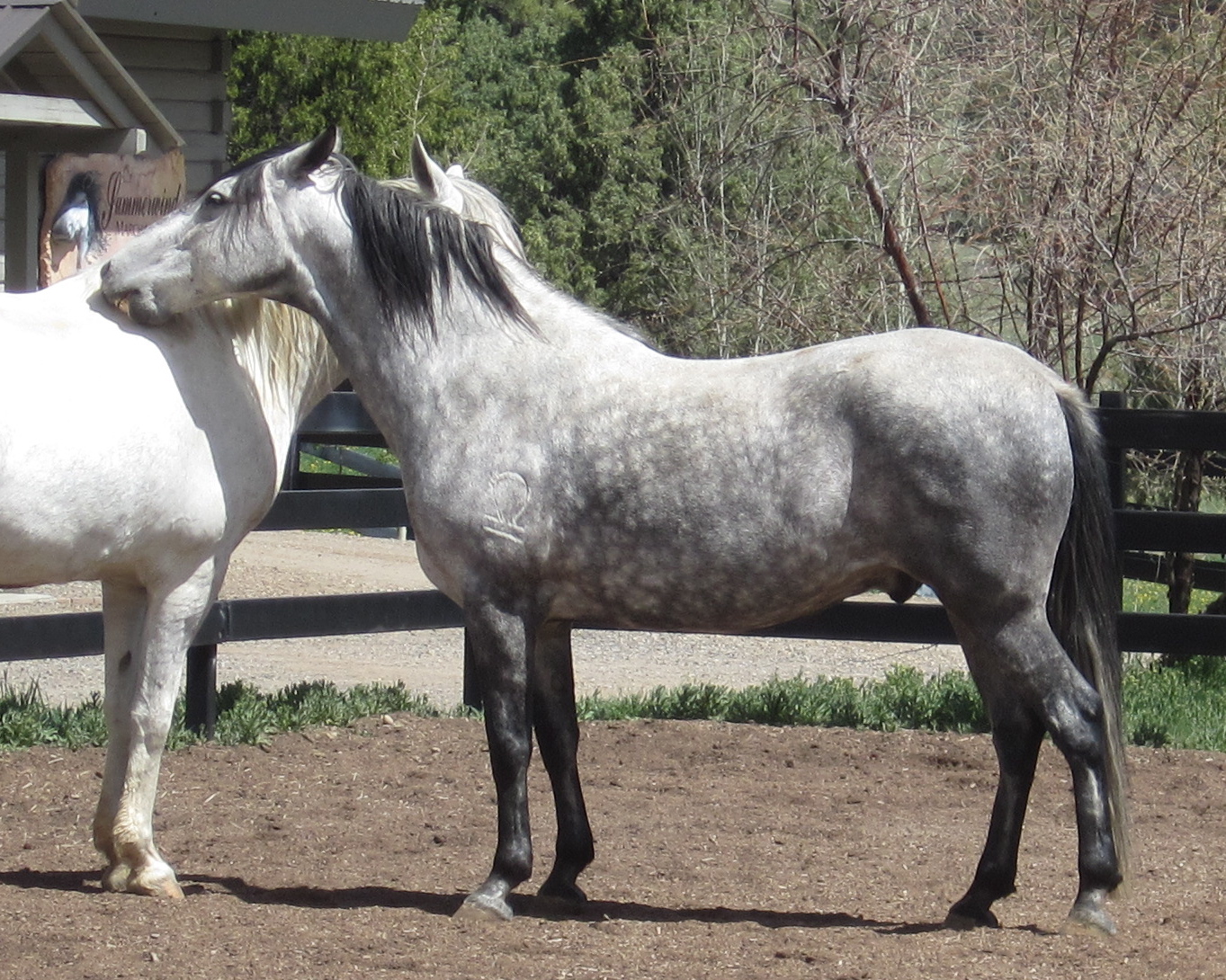
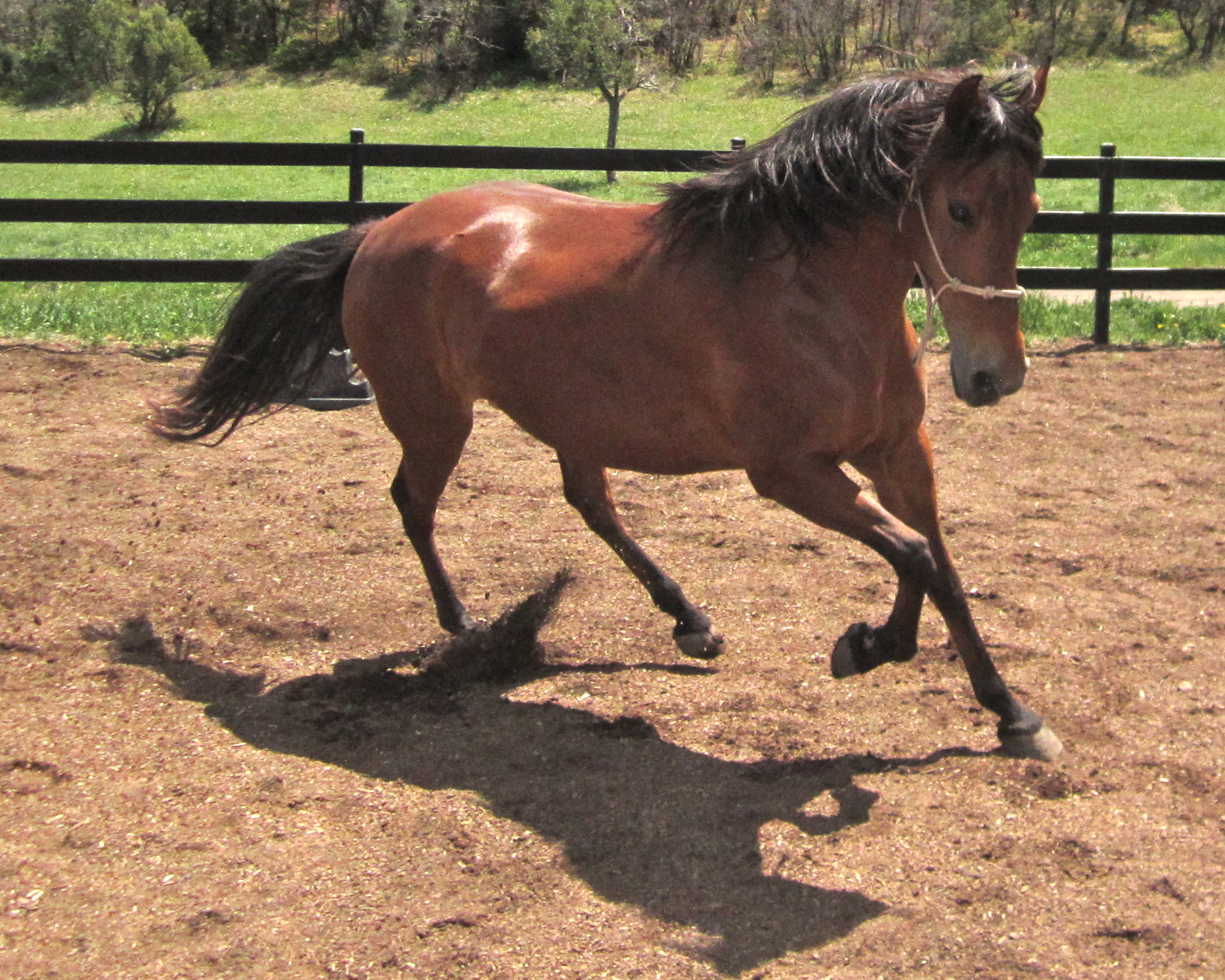
Koyote and Artemis relaxing after the long trailer ride
Azenha de Maripa enjoying the pasture life in CO
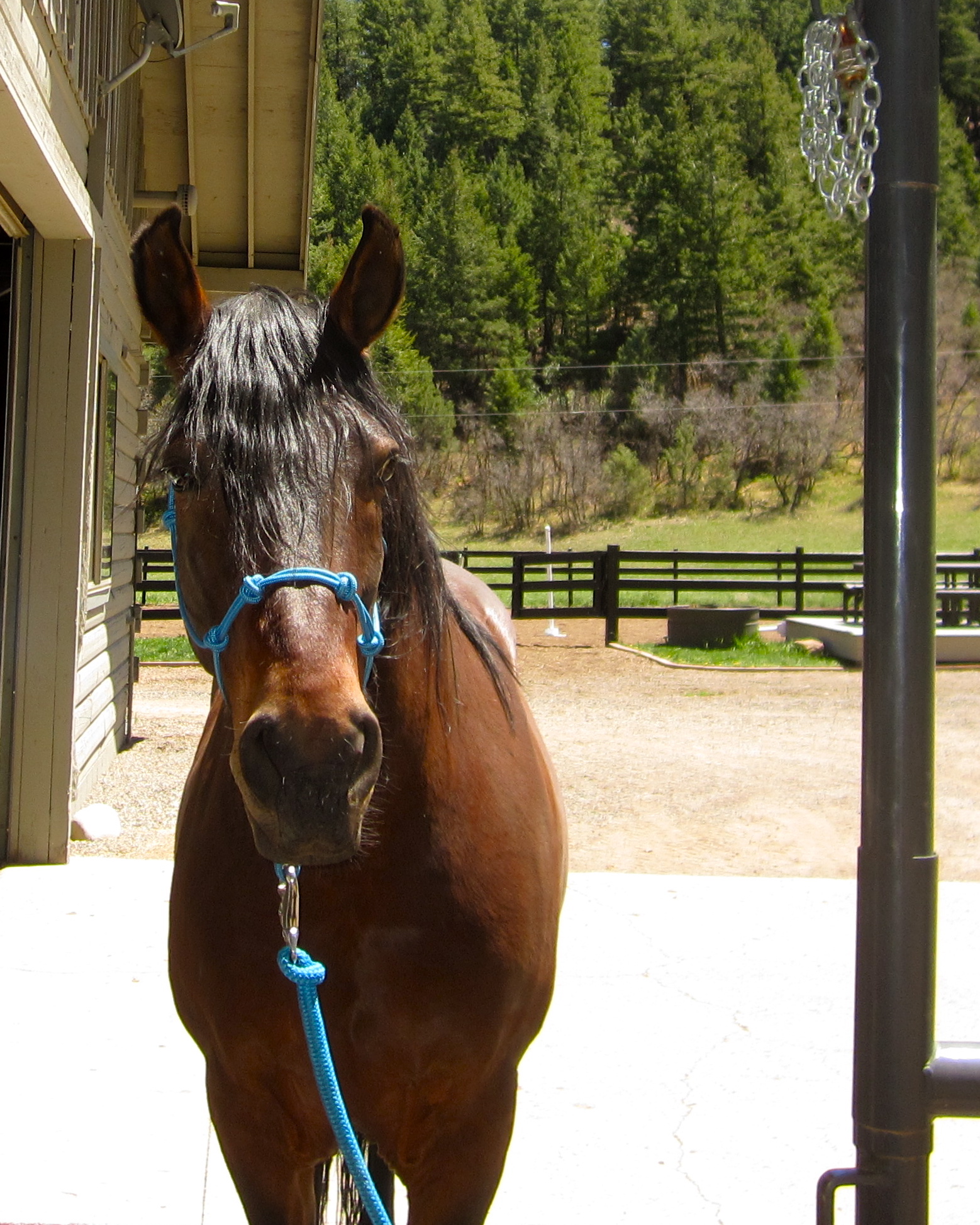
Caboclo waiting for a ride
Seamus da Boa Fe moves so well up here – soft, not granite!
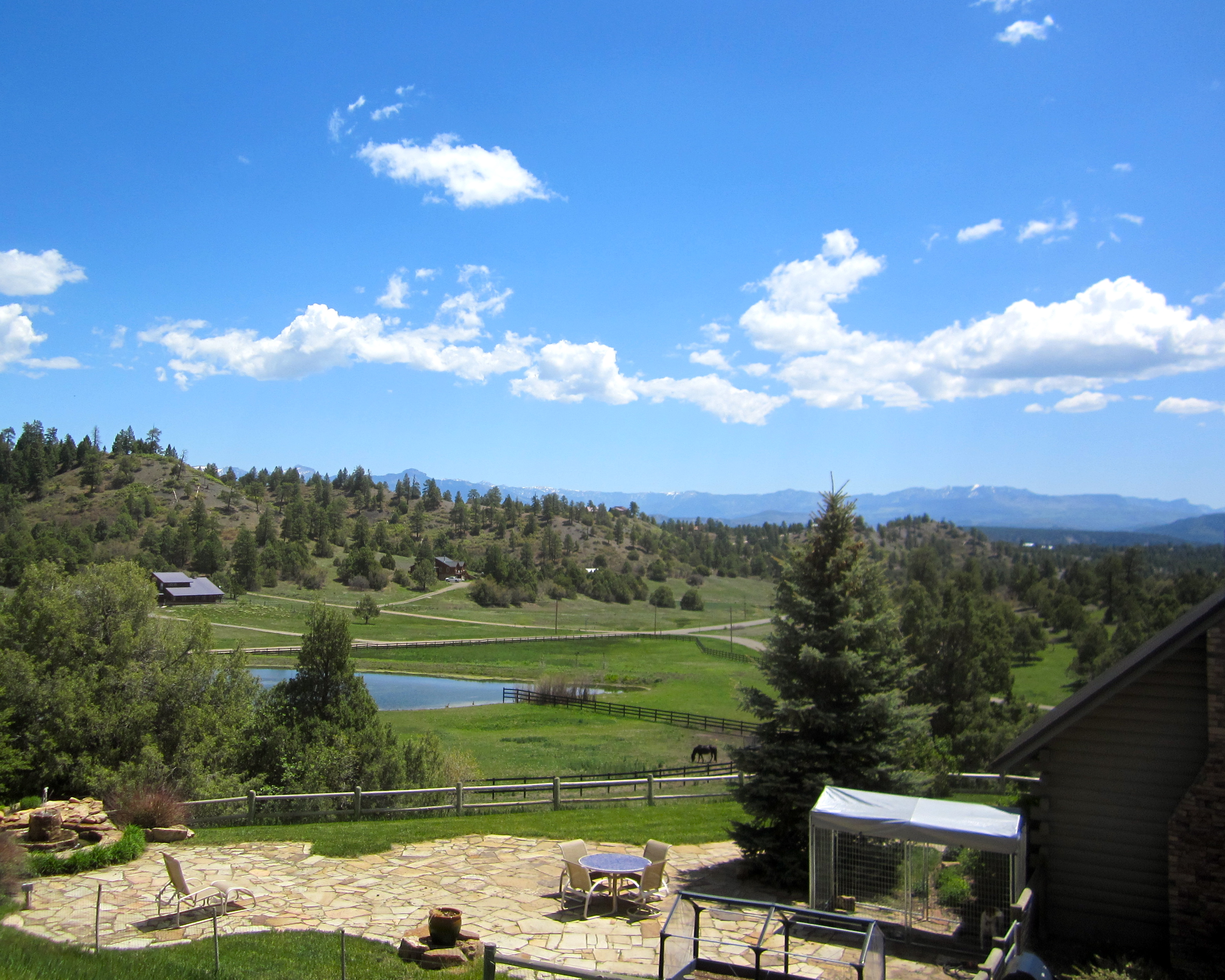
The view down our property from horseback.
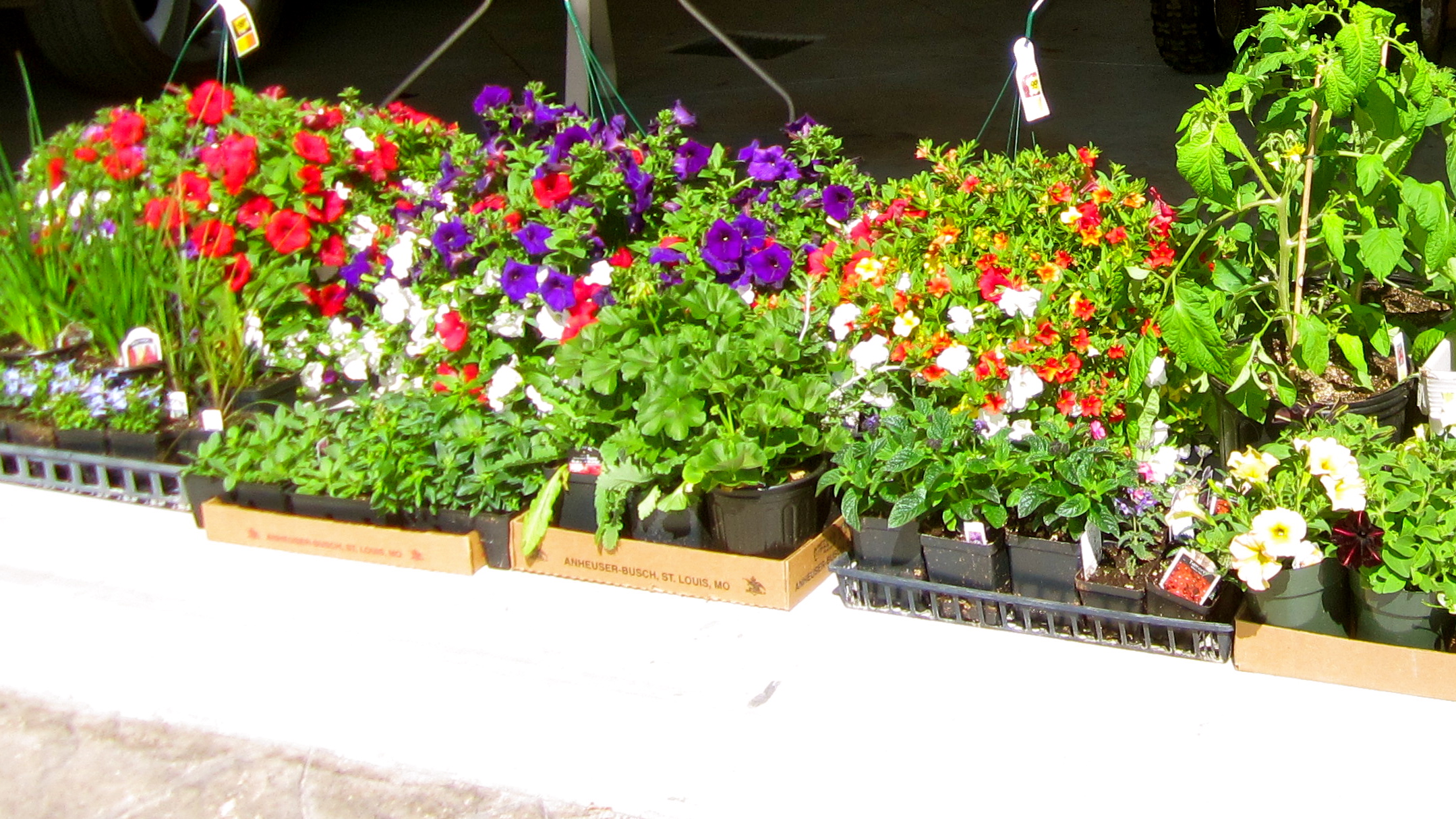
We love to garden and to cook! Plants hardening before planting!
Azenha and Brasilia are both pregnant! YEAH!!!
The deer and elk were here to greet us. Babies coming soon!
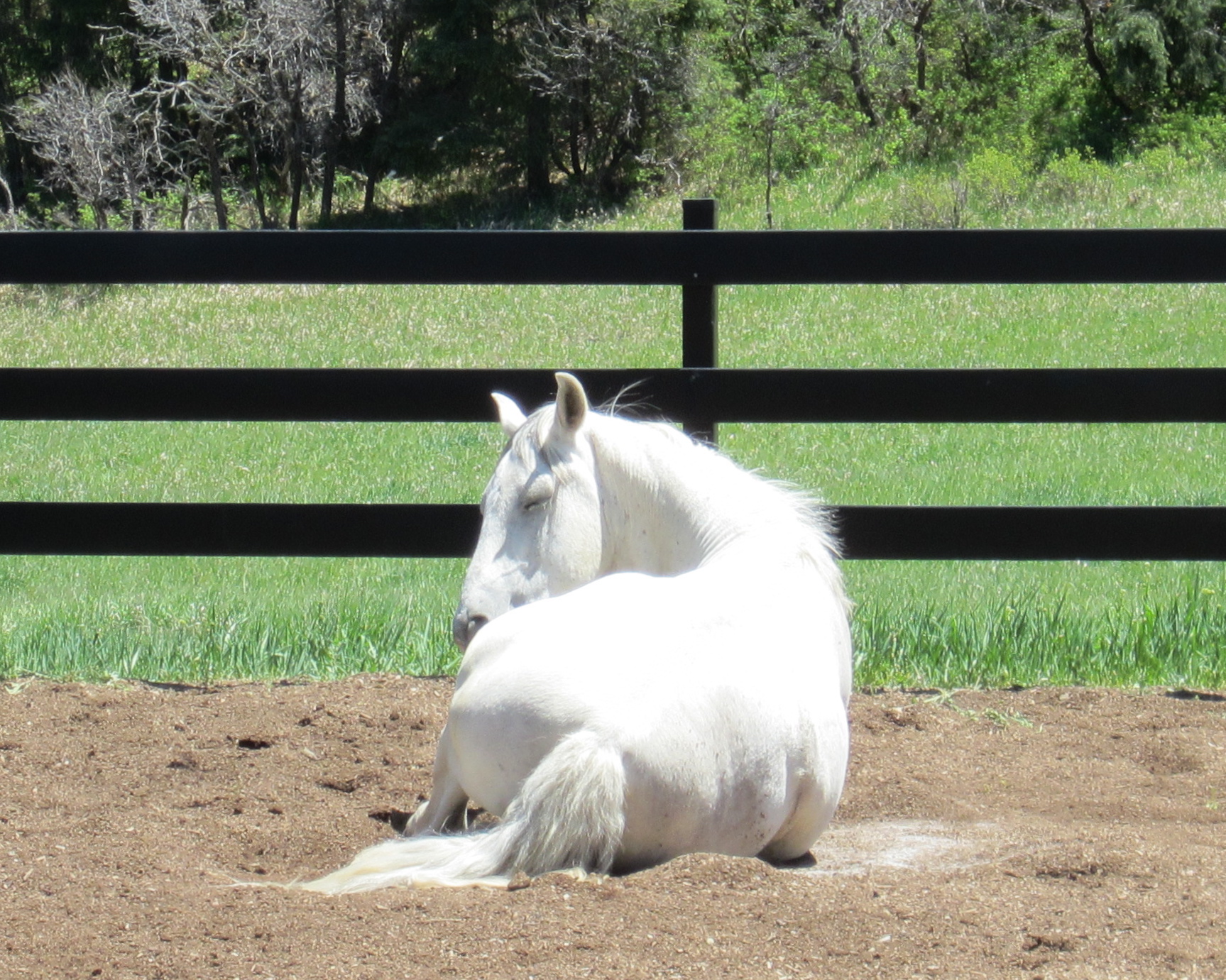
Sleeping in the Sun is Seamus
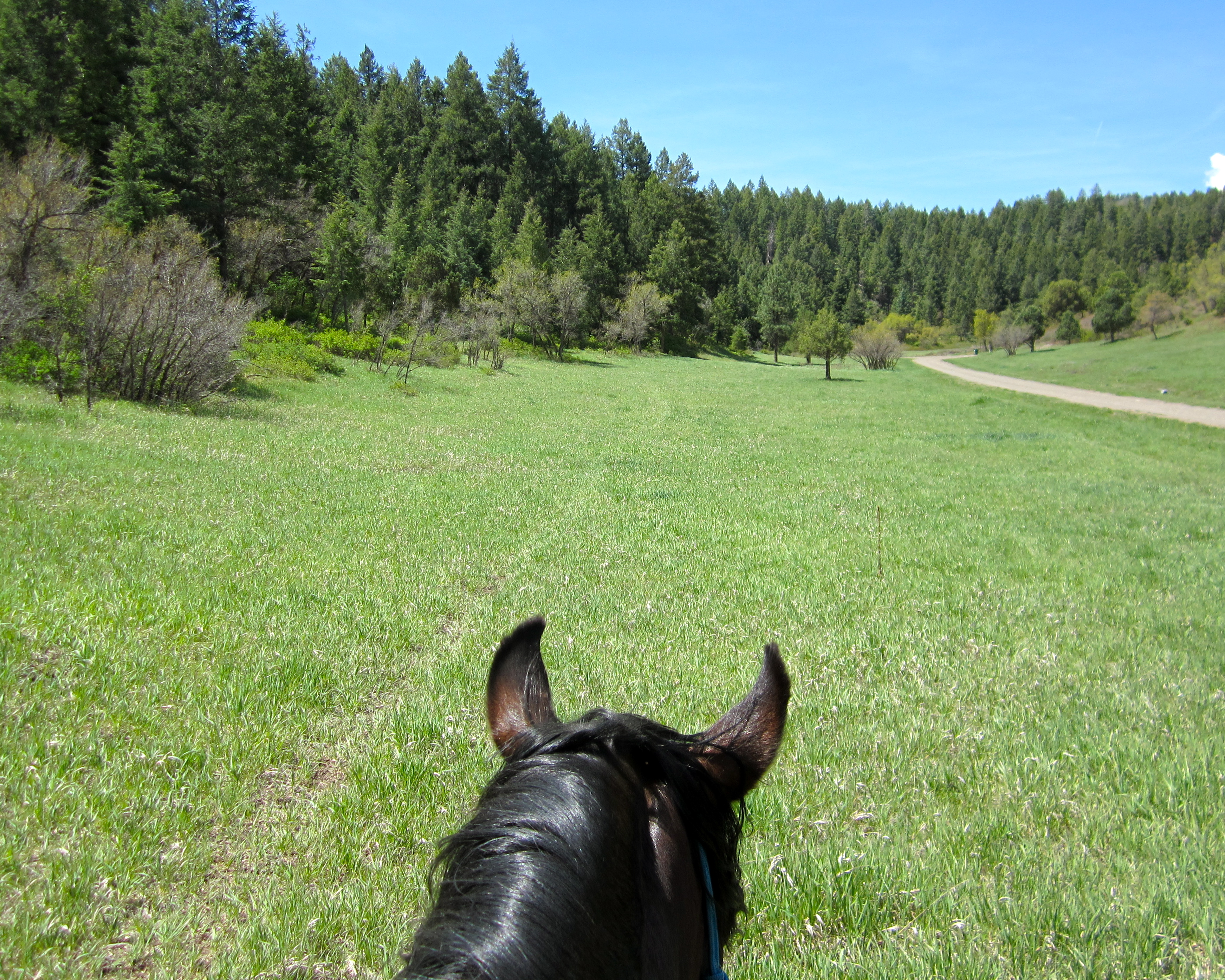
The MM ears point the way up the meadow! This is our regular route.